To the Donkey of the Sagrada Familia
You clung to the cliff above us, your brow darkened by smog and shit-splattered, your feet splayed but sure. I'd seen your face before. The same weary expression hangs on the faces of the mules who stand, shifting from hoof to glittered hoof while they wait for some family to carry down Bourbon Street as you carried this one into Egypt—Joseph's son at your head, Joseph behind, Mary side-saddle, holding the baby son of God. It's a jaded look: your ears loosely back with more boredom than ire, an eye anxious only for the chance to rest.
Of course you were tired of us, we sweaty masses, gawping. Over the last century, we've proliferated, so that this year my own family were only three of nineteen million tapas-happy pilgrims standing beneath you, robot tour guides in our ears. Those of us prescient enough to buy advance tickets had been allowed onto the basilica grounds in 15-minute batches, corralled through a series of chutes as if we were in a slaughter house tented in white vinyl, except the scary men beyond the barriers were there to take away our knives. My daughter's rocks—two tumbled bits of tufa she kept in her pockets—were briefly considered for menace, but in the end they let us through.
Our numbers can be explained, in part, by the fact that none of us made this pilgrimage on the back of a donkey. In sixteen hours, my family had slept our way from New Orleans to London, eaten a Heathrow rarebit, and flown on to Barcelona, where, to deliver us at the inn where a room was waiting, our taxi driver had backed a hundred meters down an alley designed not for cars but for you. But a donkey cannot transport a person across an ocean in sixteen hours, and so you are no longer a conveyance. Perhaps you prefer it that way.
As I looked at you, I thought about all this: your sure-footedness, your carbon footprint, the obsolescence you hadn't planned. How animals like yourself, once essential, were now being called a nuisance on the bridle path in Central Park—all that manure! Travelling at great speed in our metal boxes, we no longer feel your spine move under our seat bones as you carry us down dirt roads, nor do we walk at your head, having burdened you with baggage, leading you to water, urging you on. You are to be looked at now, and looked at only, the subject of TikToks in which, miniaturized, you scamper around inside some trad-wife's kitchen—all that manure!—or bray on an Australian terrace for the likes. Shorn of your function, you have become abstracted, no longer a known animal—soft-furred and bristle-maned, that dorsal stripe recalling your wildness—but the idea of an animal, an embodied memory of a more pastoral time.
So, looking, I found myself suddenly in tears when the automated voice told me you were a real donkey, once upon a time. Your name was Margarita.
“To achieve it, the architect would build a temple of the real, a sandstone prayer.”
The Sagrada Familia was not, of course, built to be a tourist attraction, any more than the donkey was domesticated for TikTok. Resistant to the secularizing forces of the Industrial Revolution and Darwinism both, Antoni Gaudí set out to glorify divine creation through an organic architectural style derived directly from found forms; in the architect's hands, the undulations of a Tridacna shell become a roofline, a forest of branching trees holds up an apse. Nature's laws and geometries determined Gaudí's structures across his oeuvre, but the Sagrada Familia would be the ultimate expression of this idea, a glorious act of imitatio Dei. To achieve it, the architect would build a temple of the real, a sandstone prayer.
The flora and fauna of Gaudí's Catalonia flock the basilica's facade, so lifelike that from a distance the church appears to be a storm-torn sand dune dripping water, crawling with crabs and sea rocket, pecked at by terns. Up close, the stone snails and palms and tortoises look even more alive—for the simple reason that they once were.
Human, animal, and vegetable alike, the facade's figures were lifecast, a process in which a living model is greased and posed according to the sculptor's vision, then coated—limb by limb, whisker by whisker—in plaster which, when released, becomes a sculptural mold. To represent the massacred innocents of Bethlehem, for instance, Gaudí shrouded stillborn babies in plaster, and he cast a six-toed giant from Tarragona to wield the infanticidal sword. The procedure was so unpleasant that when Gaudí's assistant, Ricard Opisso, felt the plaster hardening on his greased body, he lost consciousness. But it was worth the trouble:
"Decadence sets in," Gaudí wrote, "as soon as man forgets to look at nature."
But had he really looked at you, Margarita?
He looked for you—that is true. You could not be one of the model donkeys led into the workshop in El Poblet, clear-eyed and curried and well-conformed. To play the role of a donkey who had carried holy refugees through a desert—who, having saved Jesus' life, remained un-canonized, unsung, even apocryphal—you must be rawboned. So, the architect sent his men into the neighborhood where humble two-story dwellings were being swallowed up into the modern blocks of the Cerdà Plan. They looked for you among the rag-pickers and the tinkers. They looked for you at the markets, standing beside blankets covered in vegetables carted in from the fields. Finally, they found you following your old woman on her rounds. You were sickle-hocked, spavined, your head hung low, but still, you went door to door, carrying clay your woman sold to housewives, so that they might make their own bowls.
Gaudí's men had to pay your woman for you—she could not give away your labor, even for a day. But as they led you to the workshop, she followed behind. They would kill you, she was sure of it, and, sensing her fear, you became sure of it, too. You flinched the moment they touched you with the grease brush, reared back, your ears pinned— but, for God's sake, you had to be still!
They thought to run a sling beneath your belly and hoist you off the floor, but anyone who knows anything knows a donkey likes to have four hooves on the ground.
You fought. Of course, you fought! What are your rock feet for, if not resisting? Survivor of four million years, give or take, of saber-toothed tigers and wolf packs and lions, you run when you sense a threat. You kick. You remember you have teeth. When an architect tries to cover you in plaster, the five thousand years of your domesticity hardly mean a thing.
So he knocked you out, the architect.
And your old woman wept, convinced you were dying.
For several agonizing minutes, her premonition played out before her eyes. While you dangled, petrified, she watched the canvas around your ribs for signs of your breathing. White crept across your limbs, your slung barrel, your neck, even the tufted tips of your drooping ears. As they painted the color from your face, her heart went cold. No matter how much clay she made you carry, you had never before refused your labors, but now, this was how you'd be remembered. They had made your death mask as you slept, unwilling.
When the chloroform wore off, though, you woke, and you were sent back, dazed, into the streets, your coat stuck all over with little bits of white, your transformation into stone, for the moment, incomplete.
The honor, I suppose, was meant to be your recompense—to have your image graven beside those of St. Joseph and the Virgin Mary, the baby Jesus raising his benedicting fist—but, as I stood there under the Catalan sun, I didn't read gratitude on your face.
After all, what kind of immortality is art, for a donkey? The relatives of yours I've known are not impressed by much we do, not even singing. Respect, they value. And rest. Molasses. Back home, the French Quarter carriage mules go on holiday in the same pasture where I keep my ancient horses, and they'll trot to the crooked gate for carrots, sticking their big lips out, ears so pricked they quiver: ten grass-fed bodies in a line.
Lately, I've been crying in churches. It started in Rome, at the top of the Spanish Steps, where the image of the Virgin Mary I'd been taught as a girl to venerate waited behind the monastery walls.
Mater Admirabilis! the pope said, when the fresco was unveiled—so, that became her name. A 19th-century postulant, Pauline Perdrau, had painted her in her own image: a teenager in garish pink, with her distaff and lilies, her halo of golden stars. A hundred years later, as schoolgirls in plaid skirts at the Academy of the Sacred Heart, we were supposed to see ourselves in Mater, this child just accosted with the knowledge she was pregnant with the son of God. She appeared on our prayer cards and school prizes; a framed reproduction of the fresco hung outside the cafeteria doors; and each year, on her feast day, a senior—chosen by the faculty for her Marian humility—would sit in tableau before the altar of the chapel, holding an alumna's baby in her arms.
It had been years since I'd thought of Mater, but that day, climbing up to the monastery in the Roman heat, I was suddenly baffled by her serenity—her downcast eyes, her idle hands. This girl talked to angels—didn't she know the son she bore would one day lie dead in her arms?
By the time I'd reached the door of Trinità dei Monti, I was crying. I couldn't bring myself to go in.
Since I'd last seen our sweet pink virgin, I'd stopped believing in innocence, original sin, annunciatory angels. I was a mother myself now, and I felt the opposite of serene. In fact, I believe serenity is impossible—perhaps criminal—once you've brought a child into this world, where islands of plastic litter the oceans and satellites masquerade as stars. Childhood, like the one Gaudí had, full of clear streams and blinking fireflies, nears extinction; as do you, Margarita. Your breed, the Catalan donkey, is so old it was observed on the Plain of Vic by Pliny the Elder—now you number less than a thousand, reliant on tourists and nationalism to stay alive. Just so, serenity relies on faith, and mine has been hard-lost in the study of humanity and our misuse of our dominion, of empires founded and genocides perpetrated not despite God but in his name.
“Childhood, like the one Gaudí had, full of clear streams and blinking fireflies, nears extinction; as do you, Margarita.”
And yet, there you were, Margarita, bearing us—tourists, pilgrims, refugees—as you have done for five thousand years. Mary sat on your back, her eyes downcast, her newborn in her arms. It was not lost on either of us that you had carried this baby safely out of Israel where babies were being slaughtered, and here we were, two millennia later, watching it happen again. Still, you would carry this mother and child as you had carried them into Bethlehem to pay their taxes, as you still carry supplies into flood-ravaged mountains and tourists down canyon slopes to the diminishing Colorado, as you carried sickly Gaudí as a child back and forth from the city of Reus to his father's farmhouse, through vineyards and olive groves. For this service, he trapped you and gassed you and covered you in plaster, claiming he did it to honor you, as a manifestation of the glory of God.
But what was really honored here? Who was glorified? Not many of us nineteen million had come to this unfinished basilica to worship, unless what we worshipped was the architect or art or human endeavor—though, to judge by the selfie-sticks, most of us had come just to prove that we were here. Imagine, though, if we had come, all nineteen million pilgrims, to fall on our knees before the earth in its real glory, as Gaudí had intended. Imagine us, supplicant before you, as you were in life, Margarita—as you tore weeds from between the cobbles or carried clay from house to house. Imagine a moment when history might have tipped toward a more possible future, a moment—perhaps while Gaudí was studying trees in search of structures that could withstand a war—when we might have looked clear-eyed at nature and finally, truly seen ourselves.
Because a donkey is a character in a story about power and salvation, and a donkey is a symbol of humility and colonization, and a donkey is a creature of our invention, who exists at our pleasure and to do our bidding—but a donkey is also a donkey, an animal like we are animals, with wants and needs, memories and traumas, capable of joy and depression, work and pleasure, love and grief, and much that is unknowable besides.
It is as a donkey that I know you, Margarita.
And it is as a donkey that I want you known.
I wish I still believed in heaven. I know too much about humans and our inventions to think it more than a balm—a fairy tale like the one I used to read to my daughter about the donkey who wished on a pebble and turned himself into a stone. But I want heaven for you, Margarita: wide green fields of unending clover, your young hocks springing. And when you call, the other asses answer from the cool valley where they’ve withdrawn to water.
He-haw! He-haw!
There, your bray sounds like laughing, though no human can hear it—just as it was created to sound.
About the Author
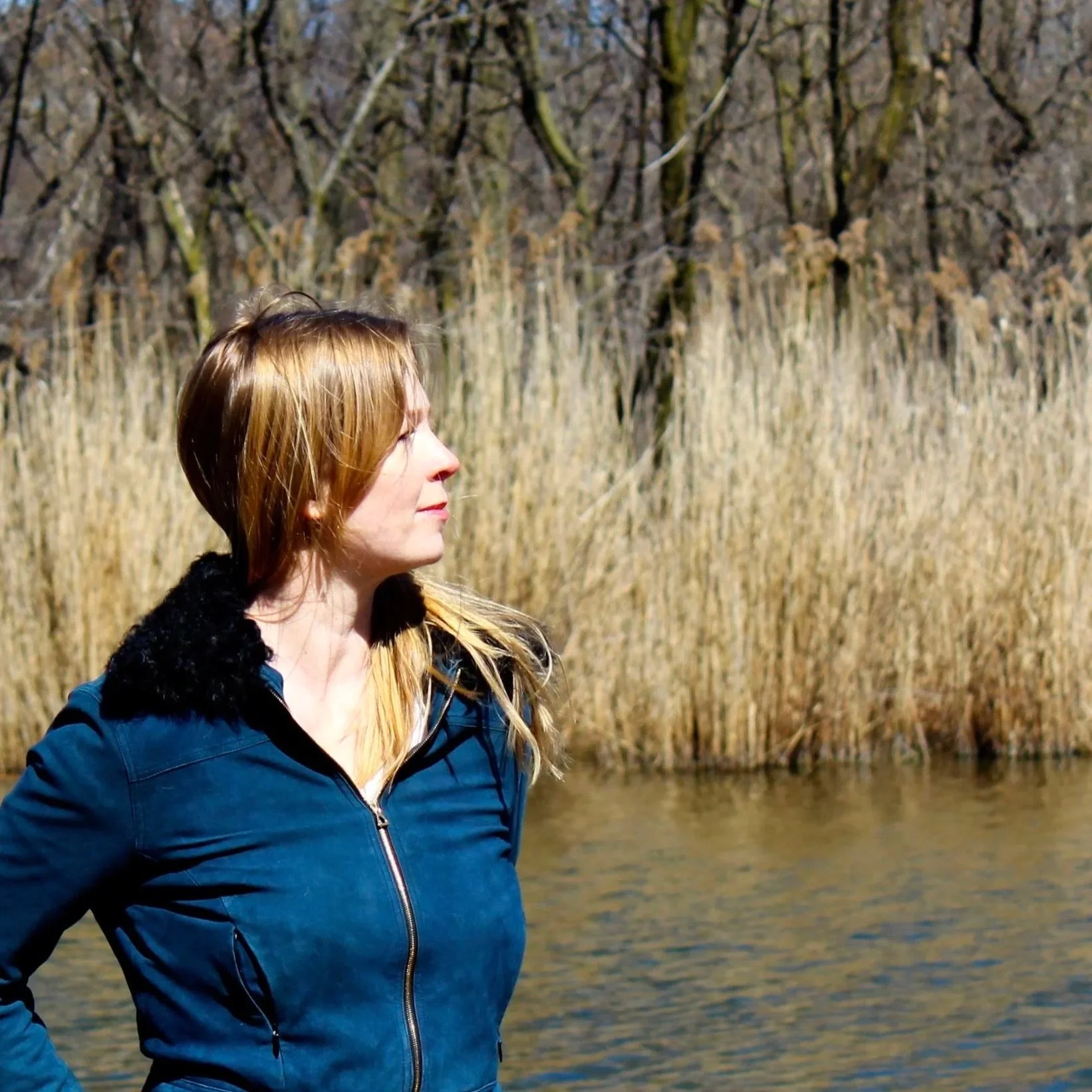
C. Morgan Babst is a native of New Orleans. Her debut novel, The Floating World, was named one of the best books of 2017 by Kirkus, Amazon, Southern Living, and the Dallas Morning News and was a New York Times Editors’ Pick.
Read Morgan’s “Behind the Essay” interview in our newsletter.
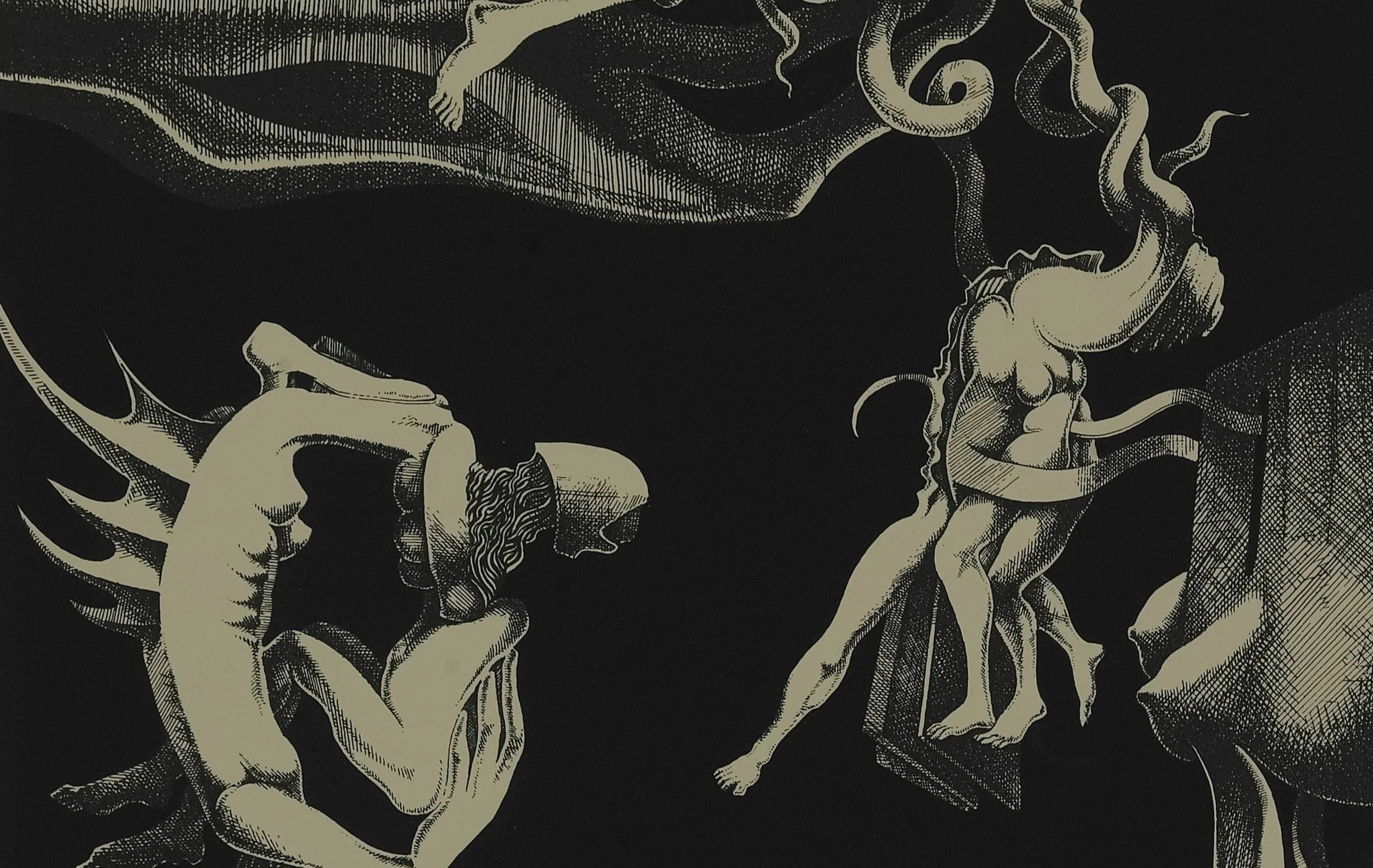
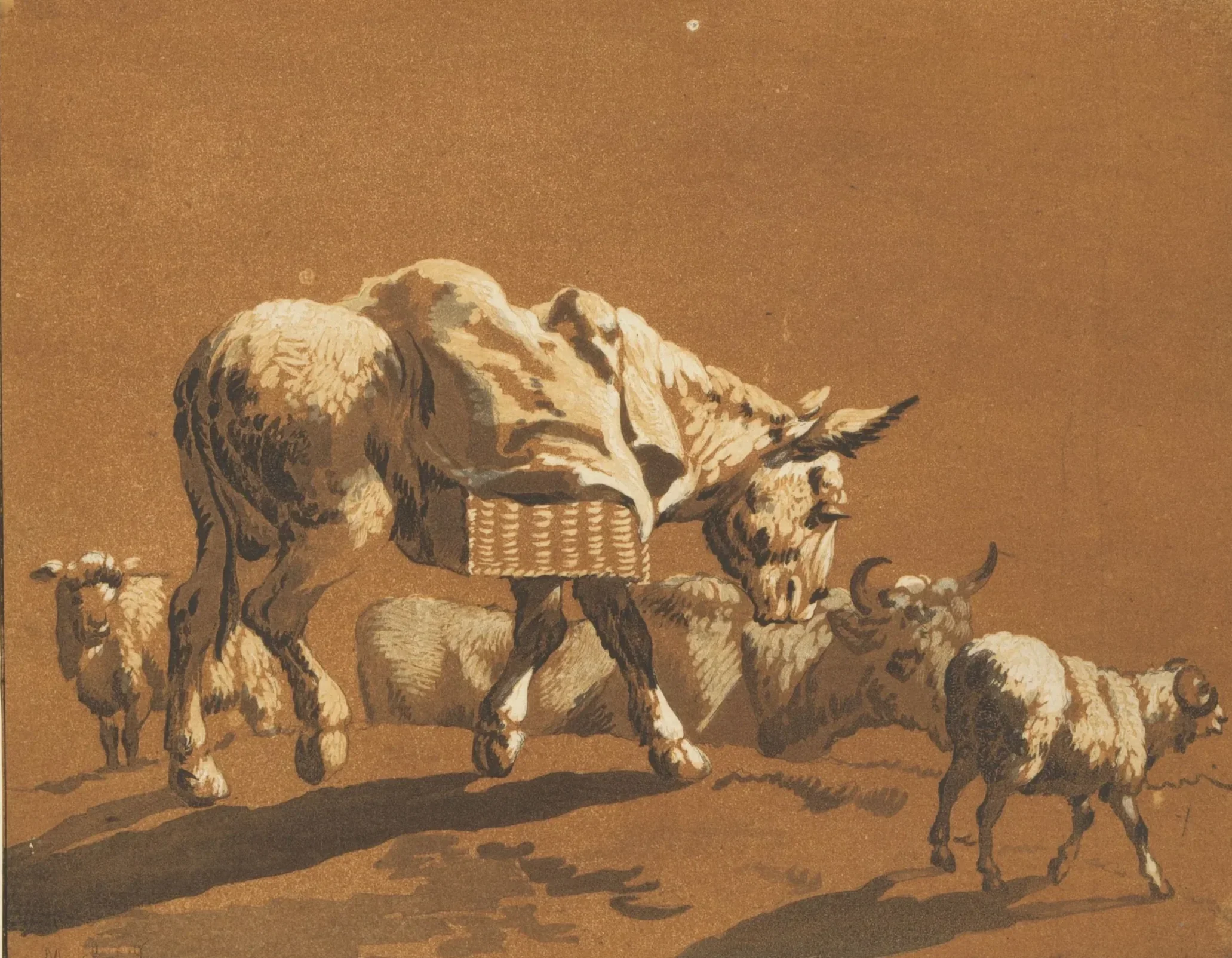
Header image: Maria Catharina Prestel, Landschap met vee (Landscape with Cattle), 1783.
Edited by Aube Rey Lescure.