To the Foundling
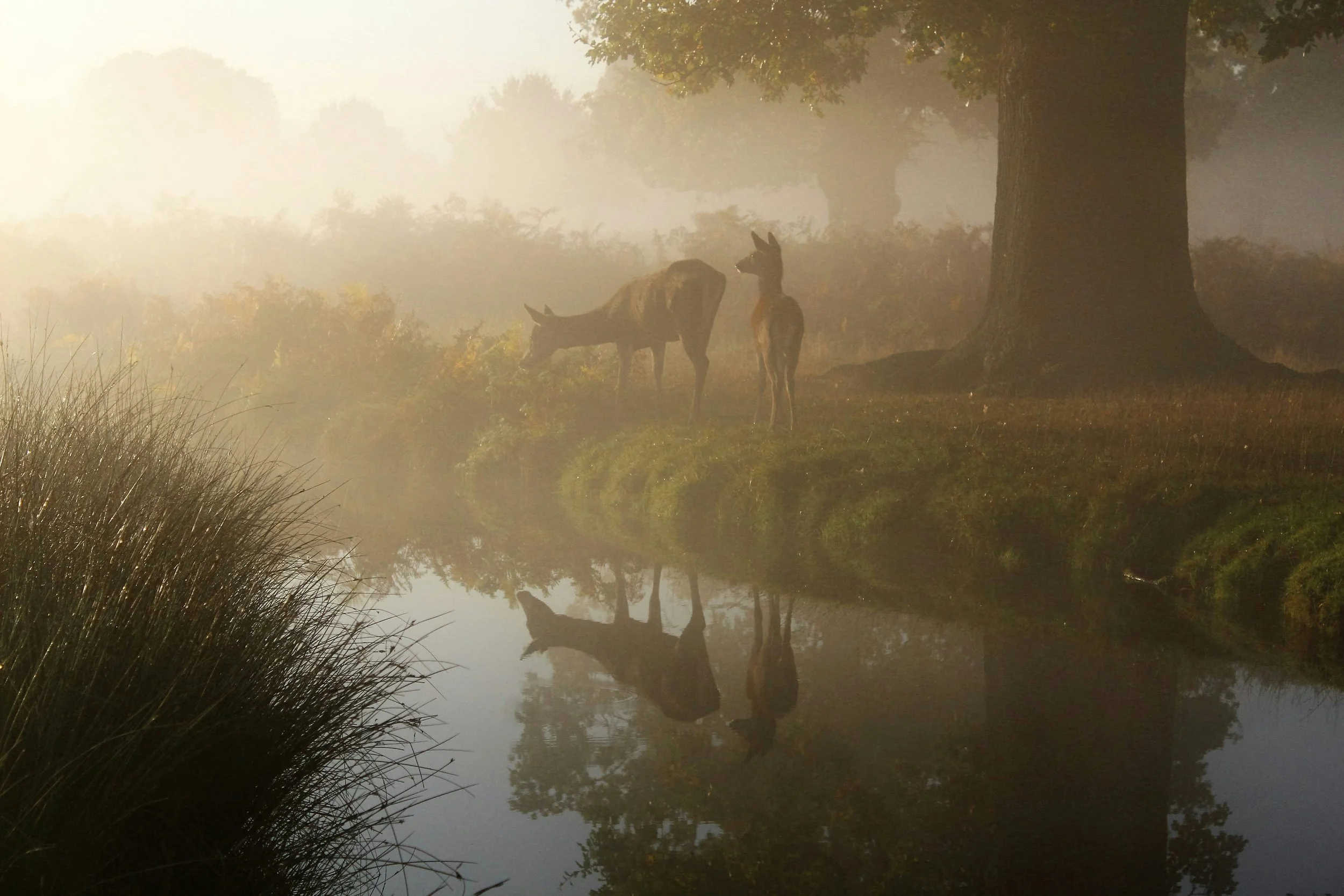
I first mistook you for a far-flung shadow pooled on the yellow ground. I was 26, back at my family’s farm, visiting, when your shape fizzled into being between the evergreen trees at the heart of the wheat field. I kept my distance, waiting to see what you would do. If I hadn’t seen you stumble from the woods, legs groping like antennae, tasting the unrelenting June heat, I doubt you would have registered at all. Collapsed in the sparse shade, your edges solidified: a fawn. The spots on your shoulder shone like silver dollars.
I called out to my father as he pulled weeds nearby. We stood side by side, studying you. “We should leave it be,” I said. “Its mama will come back for it.” He took a step closer, rubbed a weather-beaten thumb across his chin, thinking. “But what if she doesn’t?”
Humid days met humid nights, and still you slept under the goosegrass. When thunder roiled in the far corners of the sky, we set our flashlights to high beam and searched for your smallness in the dark. There you were, curled around a sapling, one eye curdled shut, the other glowing wetly. Your head drooped on your thin neck. You were too tired to protest when we wrapped you in a threadbare towel and plucked you from the woods. Cradled in my arms, you smelled of animal wetness, of decay.
My mother and sister, Abigail, watched us through the kitchen window as we carried you to the barn. Dad called a neighbor who had once raised a fawn like you. I watched him watching her hands, studying how she held the bottle. She shouted instructions over the thrum of rain on the tin roof. After she left, he cupped your head like an egg. “I’ll take care of you,” he said. The way your chest heaved. The stilted way you moved.
Had he looked at Abigail the same way he looked at you now? Once she had been wrenched from our mother’s stomach, her skin frigid and hole-punched with tubes, had he touched her the same way? As if she might dissolve?
“What a bad draw,” he said to the fawn. “What an unfair start.”
His softness surprised me; I did not trust it. The father I knew did not willingly shoulder burdens. Or coo. The father I knew was callous, hard-headed. Only with Abigail could he muster this kind of tenderness. But maybe, I thought, your plight was enough to shift something inside him.
“If you had lived, were we only prolonging your suffering? Would it have been better to have never noticed you at all?”
Under a raw light bulb, we took turns tweezing maggots from your skin as the sky tantrumed. He held a clean rag soaked with warm water to your eye. I wiped the stains from your legs and marveled at their thinness. I wanted you to live, of course I did. But I braced for the worst, as was my nature. Dad brought in a fallen pine bough and placed it in the corner of the stall so you wouldn’t feel so exposed. Your body hardly made a dent in the cedar shavings.
That’s where I left you, tucked under the branch, hot goat milk swimming in your stomach, my father crouched beside you. That night, I thought about where we would bury you. Under the tree where you were found, maybe. Out in the woods where the other deer slept. By the wild blackberries.
The next morning, I crept outside as the rooster crowed. Leftover rainwater spilled between blades of grass, cool beneath my bare feet. Walking to the barn, my heart felt small and hard as a tick: I worried that you’d died; I worried that you hadn’t. If you had lived, were we only prolonging your suffering? Would it have been better to have never noticed you at all?
Inside, it was dark and dry and warm. I was surprised and relieved to find you awake, gazing solemnly at me with your good eye. You were stronger than I thought. When I held my hand out to you, your hot breath doused my fingers. I marveled at your size, a deer rendered in miniature. I could have tucked you in the pocket of my jeans. I could have slipped you in an envelope and shipped you clear across the country. The house cat was bigger than you.
I tended to you: hot milk, clean rag, fresh shavings, baths in a bucket filled with salt. You grew hungry, you grew brave. You had survived the night.
My family gathered, bearing witness to the miracle, as you tottered from one corner of the stall to the other. “I knew he could do it,” Dad said, sitting with his back against the wall, grinning. “That’s my guy.” He reveled in your success as if it were his own.
My mother drifted back to the house; she had better things to do. My father wandered out to the field where he had been planting blueberry bushes. Abigail stood on tiptoe to peer at you. “He’s so cute,” she said. “Do you want to pet him?” I asked. She shook her head. “No, he stinks.” I laughed—this was true. After a while, she left, too. Then it was just me and you, and the lonely sounds you made when I slipped out of sight.
You required near-constant care. Between remote work meetings, I would change the water in the bucket or sift the dirty shavings from the clean. Feedings every two hours. Endless runs to the farm supply store for milk replacement formula. “How’s my deer doing?” Dad would ask, shaking the sleep from his eyes, microwaving the last of the coffee that had gone cold in the pot.
You could not stay, of this I was certain. We weren’t capable of dealing with whatever had gone wrong inside you. Every day you spent alone in the barn felt like a gamble. I dialed the number of a wildlife rehabilitator I found online. I left a message. Then another.
Each morning, you’d shake yourself to standing and take my fingertips into your starving mouth. When I held the bottle, you greedily accepted it. We developed a rhythm. We were getting better at this.
I whispered to you, and as my dad had earlier, I thought of my sister.
I was familiar with the mythology of Abigail. All my life, I had heard the stories. She was due in spring, but was born in winter, so small she could curl up like a kitten in my father’s hands. The doctors prepared my parents for the worst. Abigail wept, the story goes, until my father held her. He tended to her, unceasingly, while my mother healed under marine-colored fluorescent lights.
I often asked my mother about who my father was during the five years before I was born. I could not fuse the man I knew with the picture of the diligent father she painted. It seemed there was nothing in the world he and I could agree on—not the clothes I wore, the way I talked, or even the sound my car made when climbing steep hills. Something within me fundamentally disagreed with something in him, and so we kept our distance in that big yellow farmhouse. My mother, ever the peacekeeper, would run interference after our fallouts, passing him notes I’d written as I was often too upset to speak. I remember the way he’d roll his eyes, exasperated by my theatrics. “What?’ he’d say. “Did she forget how to talk?”
The realization set in that I would never know the man who stayed up night after night with baby Abigail in her aquarium. He poured all his softness, all his patience, into her squirming and intubated body, filling it up so that her fragile limbs unfurled from her translucent torso, pink and humming. By the time I came along, on-schedule and intact, his tenderness was all used up. The well had run dry, and so I learned how to go without.
“I often asked my mother about who my father was during the five years before I was born. I could not fuse the man I knew with the picture of the diligent father she painted.”
He took to calling you Junie, asking for progress reports over sloshing bowls of cereal. I told him that your eye was still pasted with pus, that the maggots were back. “But he’s eating, right?” As if that were enough.
“I think I found a woman who can take it,” I told him.
“What do you mean?” he asked.
“She’s willing to meet me near Henderson this afternoon.”
The spoon clattered against the bowl. “How do you know she’s not just going to shoot him?”
“She does this for a living. She’s better equipped than we are.”
His jaw lurched forward with anger. A familiar face.
“That’s my deer,” he said.
My hands grew hot.
“If that’s your deer, then why aren’t you up feeding it every morning?”
He did not hesitate. “Because I knew you would.”
The feeling that prickled then was familiar, sharp. Suddenly, I was ten, getting in the face of a girl much bigger than me when she laughed at the way my sister walked. I was twelve, holding a tissue to Abigail’s nose as she cried. I was sixteen, brushing out the knots in her hair before braiding it and sending her to bed. I felt set up, saddled with a responsibility I had not agreed to. In that moment, the role I performed, had always performed, was laid bare. The realization consumed me. Without another word, I left.
You didn't make a sound in the backseat, bent like origami in the cat carrier. Beyond the window, tobacco plants studded the earth while double-wide trailers collapsed in on themselves. I called my dad.
“Did you say goodbye to the fawn?”
“You left already?” He was indignant. “Give me the woman’s number. She can tell me how to take care of him.”
I hung up.
Farmland gave way to strip malls. I wondered what you must think of this, all the ketchup-red signs and exhaust beating at the dust-covered windows. A semi-truck hurdled by on the interstate, and the car trembled in its wake. When I met the rehabber, I thanked her again for agreeing to take you and set you in the back of her truck. She told me about the hundreds of acres she and her husband owned and their herd of thirty deer.
Back home, in the barn, your presence lingered. I sieved the stained shavings from the clean and returned the bottles of antiseptic sprays to the medicine cabinet. I left the pine limb, its needles just beginning to brown.
Inside the house, Dad and Abigail sat in the living room as the bottom of the seventh inning unfolded on TV. They moved like reflections of one another, clapping and exclaiming simultaneously as the commentary washed over their ears. Peanut shells littered the floor; the dog gnawed them with its sharp, bright teeth. Dad didn’t look at me as I paused at the bottom of the stairs, watching them. He didn’t ask what became of you, and I knew he never would.
About the Author
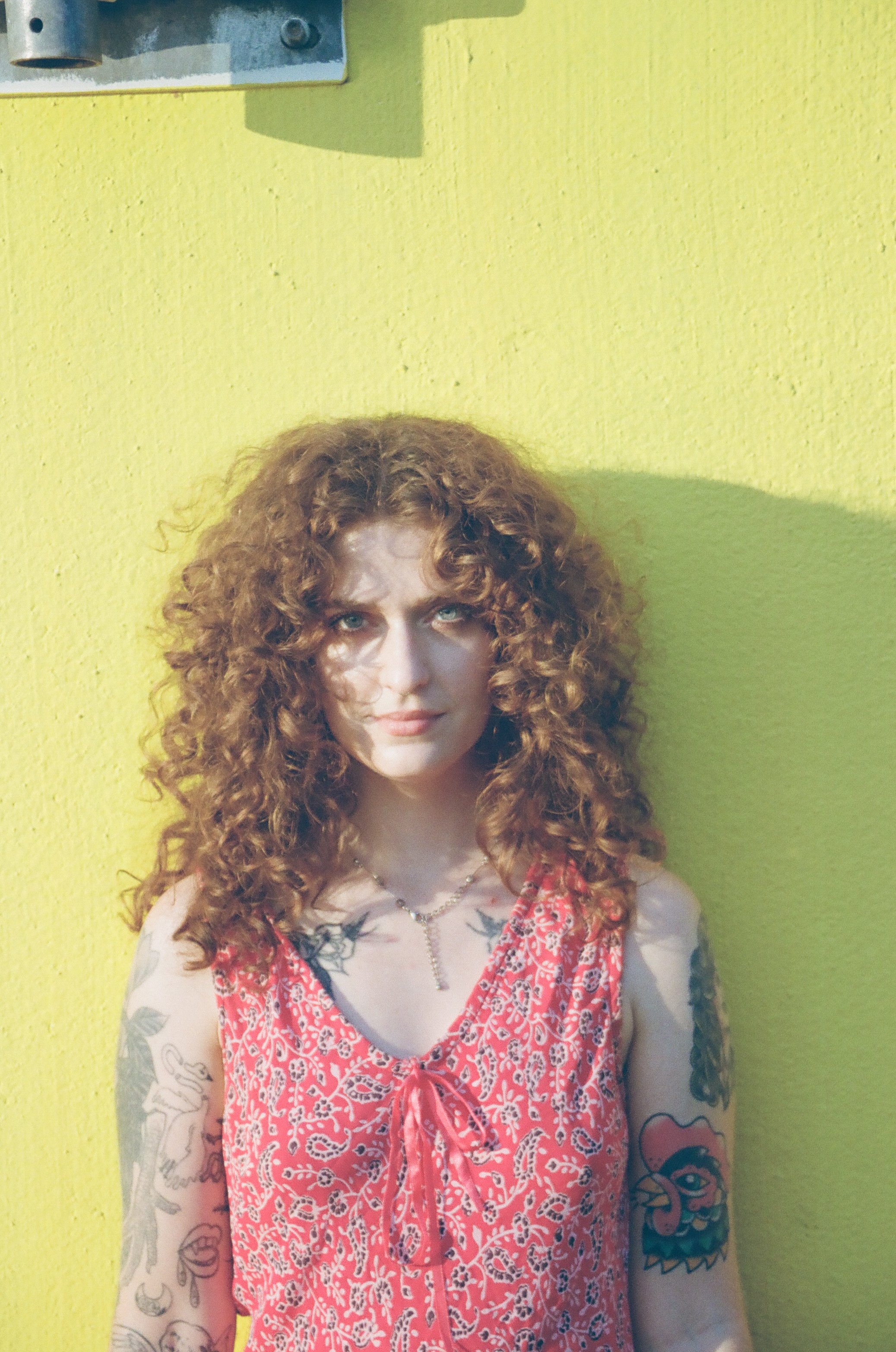
Sylvie Baggett was born and raised on a lavender farm in the middle of nowhere, North Carolina. Her creative writing explores the dichotomy of nature, the South, and humanity. She has received nominations for the 2018 A.W.P. Intro Journal Award Project, the 2024 Pushcart Prize, and the 2024 Best American Essays collection.
Read Sylvie Baggett’s “Behind the Essay” interview in our newsletter.
Edited by Tusshara Nalakumar Srilatha
Header photo by John Royle