To Valera
Please note, this essay includes descriptions of graphic violence.
All the places I have known seem to collide at night, Valera. And here I am, in darkness, my thoughts eddying beneath the pooling light of a desk lamp. Top surgery has made sleep elusive—the pain, the drugs. I catch an hour or two, then sit in these deepest hours, the blinds open, the slow groan of New York traffic below. Television sets in other flats keep me distant company—strangers also incapable of slipping from themselves. I reread the Russian newspaper clipping of your murder, Valera, the one I’d saved years ago. I have it here beside me. The past resurges in this time of convalescence, and I return to almost a decade prior, a time of bed rest following an assault and back injury, mute months in which I kept strange hours, images bleeding from yet another television set, nightmares creasing the sheets.
That winter, early one morning, a man jogged up behind me, and, with his gloved hand, wrenched me back by the mouth. He dragged me towards a river bank. He kicked me, repeatedly. He restrained me, his arm fastening mine behind my back. I remember the taste of blood and soil, the dark quiet of that night—still frozen, slumbering at the edges of myself. As he heaved me up by the jacket, the man lost his grip—a moment I have since tried to understand: fate, coincidence? A moment, nonetheless, that allowed me to run, lungs burning, until I reached the local swimming pool, just opening at 6:00a.m. I arrived, my jeans halfway down my thighs, my body bloodied, dirtied. I feel guilt. Shame. That this incident has shaped me so enduringly when I don’t consider it particularly violent compared to what can befall one across a life. But it drew a line—before, after. That morning, I realised: If someone wished to harm me irrevocably, if they wanted me dead, it was an inevitability. A body, a life—such fragile, vulnerable craft.
The newspaper clipping recounts that, as the night of February 10th 2022 tipped into February 11th in Chelyabinsk, three men murdered you, a 46-year-old superintendent, in a hostel bedroom. It explains, Valera, that you lived in the hostel with your common law wife Alyona and adopted daughter, and worked with the community, likely with the very men who murdered you. Only they did not know, until that night, that you were trans.
Of course, you know the details that the newspaper omitted: what these men permitted themselves to say and do as they brutalised your body and ended your life. I was always taught that taking a life is work best left to God, but you learnt that night, Valera, what transpired when three men thought themselves divine.
“A body, a life—such fragile, vulnerable craft.”
On the evening of February 10th, while Alyona was at the hospital, you attended a dinner date with a neighbour. Alyona explains in the clipping how, after the dinner, you called her and confessed that you told the neighbour your assigned gender at birth. How you asked for forgiveness. Hours later, neighbours reported screaming as the hostel walls shook. Three men dragged your half-naked body outside, leaving you unconscious in the snow, perhaps already dead. Towards daylight, the men apparently brought you back inside, dumped your body in the hostel room’s bathtub. You had been raped, beaten to disfigurement, and had a television set smashed over your head.
You already know this intimately, fatally well. Whereas the living, we cannot even be sure where exactly you left this life. In that room? Under the arc of a winter night, skin smarting against the snow? Or during those final hours, in the same bathtub where you once soaked your body, this place of simple rest.
So we stand, each in our own aftermath—those that pass over, those that remain. Futile exercise, this search for clarity in the past, in you. Stepping from before to after, crossing that threshold, does not necessarily mean one understands more clearly. If anything, it heralds a journey into greater opacity. To not know, to not understand, and yet keep walking.
But know, Valera, that your neighbours said you restored order to the building and yards where you worked. They noted that, in winter, you hired unhoused workers to provide them with income. And Alyona, who I imagine must think of you in so many deep hours of the night, she made sure the journalist reported that you were a devoted father. That after your sister placed her daughter in an orphanage, you paid a female friend to adopt her—your own documents being irregular in their gender markers and preventing you from doing so. That you subsequently raised your niece as your own.
The clipping contains a single black-and-white photograph of you, Valera, to which I can’t help but return. I’ve been studying it, here, under the amber glow of the desk lamp. You’re in a car, head shaved, smiling. Your right hand rests on the steering wheel, your left arm on the open window frame. Jeans, a digital watch, a jacket. I can’t decipher whether your eyes betray calm or wariness. The longer I stare, the more unreachable the man. Summer is fading into autumn here, days shortening as the world spins inexorably towards dark solstice. And here you are, indiscernible, receding as the light.
But then, what did I expect? In writing to you, Valera, I am writing a letter to someone I’ve never met—a chimeric exercise. I am writing to understand some mirage that articulates between myself and the memory of who I was, the knowledge of who I am, and the desire for—perhaps fear of—who I might become. Through you, I triangulate.
In 2010, some fifteen years before these nights of New York convalescence, I studied in Perm, Russia. That winter, I took a train from Perm to Yekaterinburg. I almost travelled to Chelyabinsk but had to return for classes. For a brief moment, all those years ago, when you were still alive, we passed within some 120 miles of one another: You already living as the man driving the car, and myself, quite alone in that moment, so far from becoming anyone I now recognise.
To come so close to one another and never know of the other’s existence. For me to learn of you, years later and miles apart, through reports of your death. What do such orbits suggest about a life, the self’s circling, our ability and inability to connect? What hand guides—God? Fate? Or are we alone on this Earth, our bodies untended by greater force? You were certainly alone that night.
“How silence left in the wake of violence is not entirely unfamiliar, how it echoes older, deeper voids.”
The photograph of you is ordinary, Valera. Yet, somehow, for me, unordinary. I, like you, grew up before the proliferation of digital images. Only at twenty-four did I have a smart phone capable of images, pixelated, hazy, did I purchase my first laptop, first had internet where I lived. To find a printed, developed image of a trans man was near impossible. Did you find one other than the self that stared back from your own mirror? I don’t know whether you felt similarly, but there is something in me that still lives in that void. Despite the proliferation of imagery, discourse, and publications, of trans representation across social media, web outlets—some core, fundamental part of myself still remembers. Still wanders the darkness of an absence: a time when there were no images, no language, when no one even talked of transness, when to mention it in front of a doctor could have any kind of repercussion. And it still can. For the first eleven years of my life, I did not even know trans people existed, that such a reality was possible. This the labyrinth, this the darkness upon darkness.
The newspaper report on your murder concludes with a quote from Alyona about your upbringing: “nothing was known about transgender people, no one talked about it openly, there was no information.”¹ A strange line—somewhere between apology, defeat, sorrow, and haunting.
Tonight, unable to sleep and sitting at my desk here in New York, I watch the sweep of headlamps along the road below. I keep losing myself in this body, its long and inescapable night. I return to the sleeper train from Perm that, years ago, carried me so close to you, Valera, carried me through birch forests, the fading light tinting the world blue. Only, in tonight’s insomnia, the train carries me to Chelyabinsk. I enter the hostel yard, where you stand, muscular, in clean cotton. White T-shirt. Fresh buzzcut. A thin gold chain lifts on and off your collar bone as you stack crates, wooden pallets. You stand, stretch. The sun shafts over your forearms as you turn to face me, slide a pack of L&Ms from your pocket: “What are you doing here?”
I think of the distance, the years lost: “I wanted to see you.”
You light a cigarette. Lips eclipsed in smoke: “See you.”
Sing to the past long enough and it will greet you as prophecy.
In these days of convalescence after surgery, my body sutured, the other side of another rending line, I look at your photograph, read of your murder, and I have the distinct sense of voices wavering through the solitary night. I listen to you, Valera, to Alyona, to you both circling back to your own thresholds—entering the breach of a before and after. I think back to that winter solstice. Did that stranger want to rape, murder, or abduct me? Or something else? Why am I still asking? As if by knowing, I could understand what I avoided, as if through knowing what I avoided I could understand this path, this life.
To sit in the breach with another, even in disjoint, even across time: me, here in New York, after the assault, after top surgery; and you, confined to an ever receding “before.” Where did they lay your body to rest, Valera? Were Alyona and your daughter the ones to whisper the final goodbye? And what of your family? Their tenderness, their grief?
As I said, I feel shame, some strange embarrassment for still living. When I think of that night years ago, I feel as if I cheated, as if I escaped by some false or underhand gesture. That, had natural logic or consequence been born out, I, like you, would have walked from this life. I am unsure whether living in this state of “after” gives any clarity, any shape or purpose to one’s life. After that night, when a stranger restrained, dragged, and kicked my body, I suffered a breakdown, was unable to speak, read, or write for months. I sat, instead, in mute static. Those who know and love me—family, friends—believe I have abandoned that time of glacial darkness. Yet I feel it, barely an inch from my own face—quiet, dangerous. The effort lies in turning from it, in not answering this call to immobility, to a snow-banked pine forest under perpetual night. I am speaking to you, Valera, for I sense you understand such immense quiet. How silence left in the wake of violence is not entirely unfamiliar, how it echoes older, deeper voids: not knowing oneself a possibility as a child, living in a body one doesn’t recognise. How one night is really many long nights.
Exhaustion, pain, they bring one to a visceral honesty. This week following surgery, I cannot escape myself. Can only, after a decade, circle back to that last time of being bed-bound, that winter night followed by months of static silence. And so I sit reading the horror of a home entered, a body violated, a self left to articulate thereafter. Since that distant midwinter, Valera, I have noticed in myself an unrelenting effort to build—career, home, relationships. A striving against rupture, a desire to ward against disintegration of body and self. But to exist in the wake is to fracture. Perhaps it is also to deny that same fracture.
Sat here, tonight, in this amplifying silence, knowing we will never exchange word or gesture, I tangibly feel the honesty of a life: here the vitality, here the brutality.
About the Author
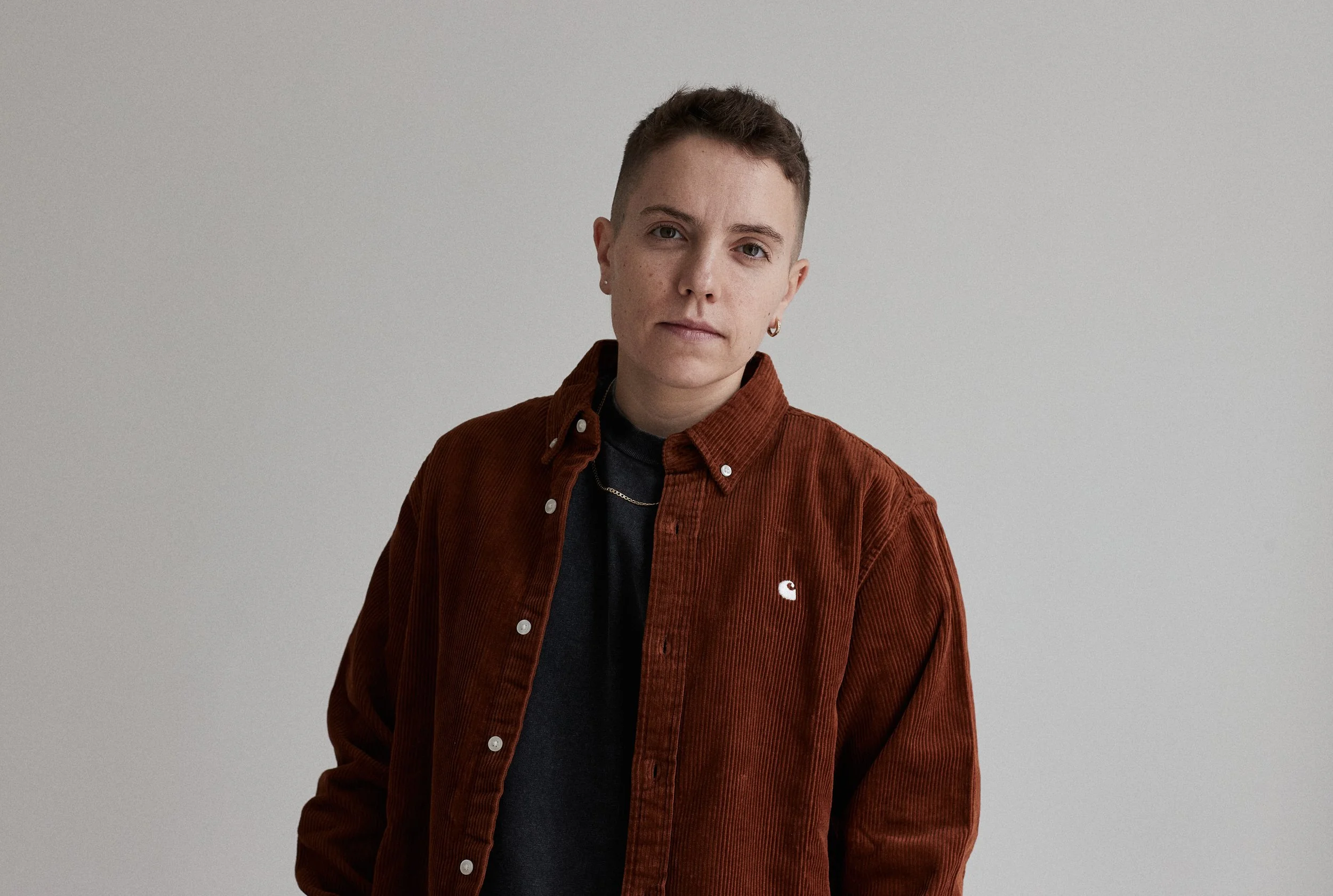
Lars Horn’s first book, VOICE OF THE FISH, won the 2020 Graywolf Nonfiction Prize, the 2023 Great Lakes Colleges Association New Writers Award, and was named an Honor Book for the 2023 Stonewall Israel Fishman Nonfiction Book Award as well as an American Booksellers Association Indies Introduce Selection. The recipient of the Tin House Without Borders Residency and fellowships from the Sewanee Writers’ Conference, the Kenyon Writers Workshops, and the Virginia Center for the Creative Arts, Horn’s writing has appeared in Granta, the Virginia Quarterly Review, the Kenyon Review, Poets & Writers, The Rumpus, Literary Hub, and elsewhere. He lives in New York and teaches at Columbia University.
Read Lars Horn’s “Behind the Essay” interview in our newsletter.
Edited by Tusshara Nalakumar Srilatha.
Header photo by Shavr IK.