To the Old Man in the Cowboy Costume
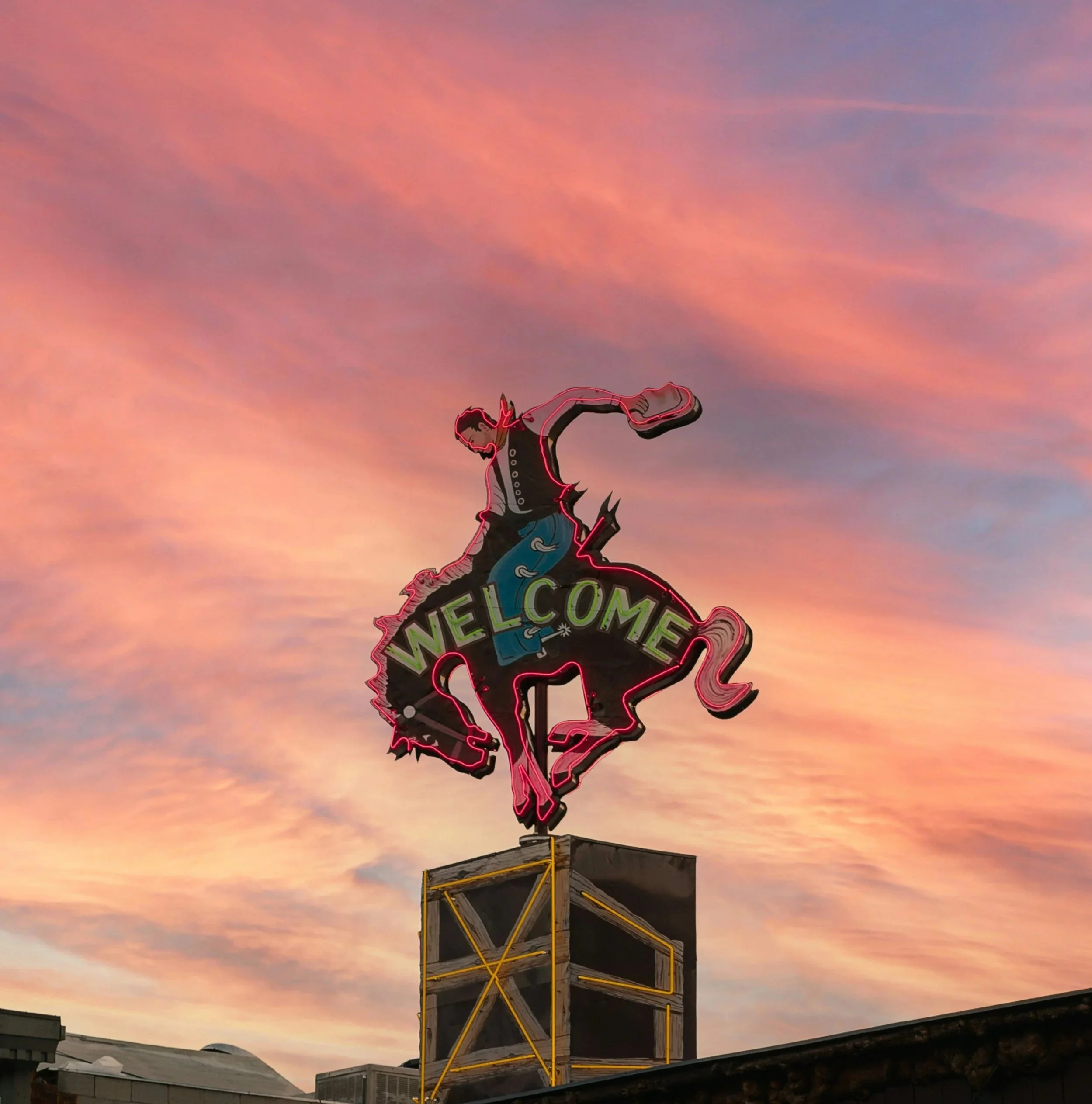
You wait there in the alpine light, beneath the fluorescent glow of the Thai restaurant. Your hair is cropped and peppered with gray, grown out from a few months post-shave, I suspect. You’ve lost some weight, lean again the way you were when I was young, but you still stand tall for someone from our country. A simple clean shirt, denim jeans, and brown boots—leather, like those you’d see on a cowboy.
You don’t notice me at first. There’s a frown etched into your face. Sadness? Confusion? Sorrow? I wonder how the last few years have treated you. An old man by now.
It’s been a few years since I last saw you, much longer since you’ve been home, and an “eternity”—the meaning of my last name that I take after my mom—since I saw you as my hero. In some ways, you are a stranger. In others, someone I’ve known as long as I’ve known myself.
You ask where I’m staying; it’s an absolute cosmic coincidence that my partner’s aunt has a cabin in this exact town where you moved two months ago. “Particles of fate,” as my therapist says.
We don’t small talk—we never did. Even though we barely keep up—and there’s so much about me you don’t know anymore—there’s always been an ease.
I ask how Colorado has been treating you. You say the air is nice, the mountains beautiful. It’s not like you had a choice—it was just where your contacts sent you—but it’s not a bad place to be. It’s your dream to ride a horse, and you’ve always had wild aspirations of living on a ranch. Maybe someday.
“But is there anything here for you? As an illegal alien. Undocumented. Unlawful. Unwanted.”
We talk about the genetic condition I inherited from you but only found out about a year ago, the one that makes me joke I have a broken heart.
Have you been taking your medication?
Only once a week, to save money.
I scold you, tell you to take it daily like the doctor ordered.
Trump’s new policies have affected you. You had a social security number until it was flagged as one belonging to a deceased person. Luckily, you’re able to get medical care through a charity for the poor. Meanwhile, I was recently naturalized as a good immigrant, an “alien of extraordinary ability” as my documents said.
“There’s nothing left for me back in Thailand,” you once told me. But is there anything here for you? As an illegal alien. Undocumented. Unlawful. Unwanted.
You escaped a lawsuit to this country, to eke out a new living in the land of the free. One stupid mistake a decade ago has haunted you ever since: a romantic affair with a younger woman—twenty years old, still a minor in Thailand. The same age I was when I found out. You said you were visiting your daughter in the US to get a visa, then overstayed. I can still recall the rising bile in my throat when I got the call. The disgust and shame over the affair—and a deep sense of betrayal that you would jeopardize my hard work, hopes, and dreams of naturalization by using my name.
*
The next day, I book a horse riding excursion in the town next door. Just me and you.
Mom always scoffed at your dreams of being a cowboy. It’s not about cowboys, my partner reminds me—it’s about the feeling of being free.
We ride into the mountains. The air is crisp and cool, laced with the fragrant smell of pine. You wear a salmon-pink shirt that cuts against the searing bright blue of the sky.
I go first, checking back frequently to make sure you’re okay. You reassure me you’re fine, but I can sense the trepidation from your response, see how stiff you sit on the saddle. I’d ridden many times before—on the beach as a kid when we used to take trips as a family. I remember the sensation of being on a pony, of being far up off the ground, but feeling safe with you there walking alongside me. It never occurred to me that you’d never mounted a horse yourself. When I ask why, you smile sheepishly. It was too expensive.
On a pit stop in the hills, you say you like horses because they’re sensitive, patting your colt affectionately on the head. That image—the joy and tenderness in your expression—is forever seared into my mind.
You can barely walk after the ride, but you grin the whole way home.
*
That night, we head to dinner in the little ski town—a twenty-minute walk from where you work, yet you had never been. In broken English, you recount a story to my partner I’ve never even heard. About how when you first met my uncle—my mother’s brother—he told you that men needed three things: a last name, a degree, and looks. You had none of those.
You reminisce about the past: your years as a journalist uncovering corruption and taking down key political figures. Your close brushes with death from working on powerful exposés. The time Mom asked you to meet, and you thought she had been sent by an opponent, so you brought a gun to your first date.
Some of your stories I recall from childhood—references to Don Quixote, Napoleon, Genghis Khan. How you loved The Eagles, and always cried listening to Queen. How I somehow knew all the lyrics to your favorite song, Evita’s “Don’t Cry For Me Argentina,” long before I ever knew what they meant. The time you bought me a scarlet instrument that I thought was painted with blood before realizing you were inspired by the film The Red Violin. There were so many stories you pulled from books and movies—romantic tales I once believed were true.
You thank my partner for treating you with dignity and respect, for not looking down on your circumstances. He later mused to me that perhaps you never felt good enough for Mom’s high society world, or for mine, and subconsciously sabotaged it all. There are similarities in him that sometimes remind me of you—a cerebral soulfulness, a soft spot for art and music and history, a propensity for stories and empathy. Perhaps that’s why he and I get along so well. Because half of me is made up of you. Because I carry your heart, too.
You both love Americana. He compliments your denim jacket, and without hesitating, you shrug it off and give it to him. You’d bought it for $14 at a second-hand store. My partner sneaks off to buy you a replacement: a Colorado hoodie, warm for the coming winter.
Eventually, we make our way to the restaurant where you work for dessert. It’s your treat. You introduce me to your coworkers. Most seem friendly, curious, and almost surprised—as if they didn’t expect me to be real. You joke that no one would believe we’re related—that your life is just above hell, while I’m in heaven. I can’t help but wonder how your life became this way. I’m the same age as you when you and Mom ran away together. When you had me.
On a bathroom break, I steal a peek inside your room beside the toilets. The size makes me choke. I think of Harry Potter—one of the first English-language books you bought me—in a cupboard under the stairs. There’s a mattress, piles of clothes, a small bottle of hard liquor, and a hose that acts as a shower. The entire space is uncomfortably warm from the water heater. A cage of your own making.
You tell me when it’s hot in the room, you take a cardboard box and lie beneath the tree behind the restaurant and feel the breeze. You tell my partner that when you’re lonely, you read. I do the same too.
As we wave goodbye, I wonder: How many more times will I see you before the end? When will you make it back to Thailand? It’ll have been ten years since you saw your own mother. You’re in this country entirely alone. I realize, with a start, that I’m the closest family you have here—and you mine.
“All the parts about me that I hate the most, I got from you. All the parts I love the most, too.”
All the parts about me that I hate the most, I got from you. All the parts I love the most, too. The romanticism, the love of history, a deep attunement to emotion, movies, and music. My teary-eyed, lachrymose nature. My love of journalism and photography.
A part of me suspects my restlessness stems from you—a fear of ending up like you. An ever-present, existential anxiety that if I don’t push hard enough, move fast enough, I won’t be able to outrun you. That the inevitable will catch up—the sorrow, the sadness, the ability to somehow so spectacularly mess up my own life—and I’ll wind up in your shoes, in a cage of my own making, too.
Yet you don’t seem depressed. You actually seem okay. You tell me this encounter has been like a dream, that I’m the best thing to ever happen to you, that when you’re sad you just think of me and are happy.
I bite back the tears as we drive away. I promise I’ll see you again soon. That it’s only a few more years before you’ll find your way back home.
About the Author
J.Y. Lee is a third-culture storyteller whose work explores the emotional geographies we inherit, and the intersection of identity, belonging, and home.
Read J.Y.’s “Behind the Essay” interview in our newsletter.
Edited by Aube Rey Lescure
Header photo by Karsten Winegeart.