To My Brother in the First 48
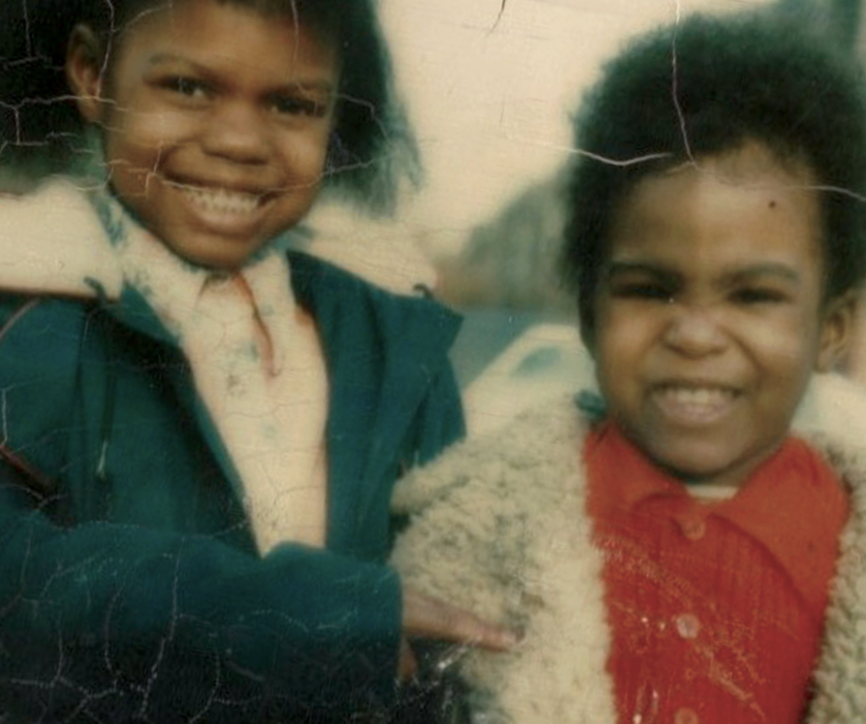
This essay is an excerpt from Brother Epistles, published by Split Lip Press in June 2026.
There’s a show I watch whenever I stay in hotels alone called The First 48. Police try and solve real murder cases within the first 48 hours. Yeah, kinda like the show COPS back in your day. After 48 hours, the likelihood of catching a murderer goes way down. Homicide detectives track down all the leads they can over two days to decrease the chance of a cold case. Yeah, I know yours is real cold, being almost three decades now. Anyway, even though I’m half-scared as I watch, I’m drawn to it. Maybe it’s like easing into a cool pool a little at a time so I can bear it. Young black guys, late teens and early twenties, make up most of the victims—or maybe those are the cases I get fixed on. Once I start, I can’t stop watching the blood on the sidewalk and sneakered feet on lifeless legs, thinking about your sneakered feet and your blood on the ground.
The family is usually interviewed. I remember how the police didn’t ask me anything about your murder. Why not, I wonder? On the show, they put up pictures of the murder victim. The TV screen shows a collage of a person, a life. Which photos would I have chosen if it were you on that show? There aren’t enough pictures to show all of who you were. When the officers go and inform the family of the death, there’s crying and wailing. The audio reaches inside me and squeezes my liver. I feel twisted and exposed. When I see those families, I live all these scenarios of how it could have played out when you got murdered. I imagine myself. Wailing and wilding out, but I didn’t do any of that in real life. I watched myself going to the hospital, the morgue, the funeral home, and cemetery in a clinically detached way like I was trained to do as a medical student in the operating room. Until one day, I assisted on a surgical case and warm blood splashed on my gown, soaking it through. It touched my skin, and then I felt the shock of realizing that we were cutting open an actual person. But I backed away from feeling your murder for a long time.
My first 48 without you started with my phone ringing. I was in my apartment asleep on that blue and beige checkered couch Dad got me from Budget Furniture. Did you ever see my place? No? Oh yeah, that’s right; that night was supposed to be the first time you were going to come up to visit me. That medical school housing seemed like luxury compared to our dirty little rowhouse on Lindenwood Street—I even had a dishwasher. Sleep pulled me under as I lay on the couch waiting for you. I slept the sleep of the exhausted. I had just finished the final exams of my first semester of medical school. I made it. Yeah, man, it was hard. You just don’t know. I had to study night and day. I did almost nothing else. I worked myself skinny ‘cause there was no way I was going to fail and end up stuck back on Lindenwood Street. I was going to make it so we would never have to live with roaches again. I was sleeping so good that I didn’t want to pick up the ringing phone, but I thought it must be you calling to tell me why you were late. But it was Granddad’s heavy voice breaking, “It’s Monir, baby, he’s shot.”
I thought of the dream I never told you about, maybe I was still asleep, please let me be asleep.
“The ambulance is taking him to the hospital now.”
“I had the sense of facing two doors, one marked DIE and the other LIVE. I had to choose.”
I don’t know what I said. I can just see myself sitting up on that couch holding the receiver, not moving, but my heart working its way out of my chest into my throat. I’m not sure how I got to the hospital, but I think, now, that Granddad must have picked me up and we rode together in that late ‘70s Cadillac. You know the one—gray with burgundy velour seats dotted with cigarette burns. I sat frozen in hope, staring out the window as the streetlights rushed by. Because it was possible that you were still alive, all I had to do was freeze time.
“I heard POP! POP! POP!” Granddad said. “And I jumped out of bed ‘cause I knew Monir was out there.” He kept turning his head toward me as he was driving. I didn’t want him to talk. I wanted him to get me to you.
The hospital lobby felt like a vast space with no walls or floors. Me and Granddad sat across from each other, high in the sky and floating above the earth. We floated in that unreality until a doctor came up and asked, “Are you the family of Monir Hall?” The doctor, a neurosurgery resident, had dark curly hair and black-rimmed glasses. He looked so clean with his white coat open over his blue scrubs, he must have changed before he came out. The resident sat across from me in that empty big museum-like space, his hair damp with sweat. The too-big chair I sat in was cold leather; I had somehow shrunk down to nothing. Next to me, Granddad sat squeezing his hat in his hands as he said over and over, “Oh me, Oh me...” His dark brown face collapsing in folds as his red eyes watered.
As the doctor leaned forward, I could see the tears in his eyes and I knew he didn’t want to say what he was about to say. “I’m sorry. But we couldn’t save your brother. He’s brain dead.” He explained that being brain dead was the same thing as being dead. No not true No not true sounded over and over in my head, like a spell to undo the truth. “Can I see him?” I asked. That’s the first thing I remember saying since Granddad had called. I went in alone, because Granddad shook his head and looked down when I turned to him. But that’s what I wanted, to be alone with you.
You were in a gray room that felt colder than the lobby. I felt like we were alone in the Arctic Sea floating on a slab of ice. You were lying on the OR table. I looked at your thick eyebrows framing your closed eyes. Did you get your haircut that day? Because your cut was fresh and you were looking like your fine self, of course. I was hoping it wouldn’t be you, but when I got close to the table I saw the faded scar from the dog bite. Damn, that’s my little brother. The only thing that looked wrong was the tense knot with dark edges on the left side of your forehead. The bullet hit you in the back of your head. I touched your arm that was still warm and smooth in my hand and I leaned down close to your ear. “Monir, it’s me, Shanda.” Did you hear me? I touched your chest and thought I felt your heart. My heart. I backed away from the table and out of the room. I had the sense of facing two doors, one marked DIE and the other LIVE. I had to choose. I stepped, unfeeling, through the second, leaving you behind.
I left the hospital as a sleepwalker. Me and Granddad drove back to Lindenwood Street, and I avoided looking at the corner where you got shot. Our street that I thought could get no worse did. Remember when we moved there with Grandmom and Granddad after Mom died? “This place is the end of the earth,” Dad said when he visited us. It wasn’t just the run-down houses, or the trolley noise and trash on the sidewalks, or even the suspicious people sitting on their steps watching everything. It was an invisible cloak of hopelessness that seemed to smother everything good.
Grandmom did her best to make it a home for us inside the house. You know she kept it clean and filled with home cooking. But after she died, it was just a place for us to stay when we had nowhere else to go. No one was out that night when me and Granddad got back, for once.
I climbed the stairs and walked into my bedroom and left the lights off. I lay in my room in the dark, not asleep or awake. I was just nothing. The phone ringing dragged me back.
“Hello, I am trying to reach the next of kin for Monir Hall.”
“This is his sister, Shanda Hall.”
“Now that his heart has stopped, would you consent to organ donation? If so, we can only use his corneas, the rest of the organs are too damaged to salvage.”
I don’t even know what I answered. I was so shocked. It didn’t occur to me when I left that hospital that I could have stayed until your heart stopped. So your heart was beating, like I thought. But when I left, I thought it was the end. Why didn’t they tell me? Did they think I knew because I was a medical student? I didn’t stay with you. I didn’t know that I could have still been holding your hand until the end. That mattered to me. You died in that hospital room alone. I hate that.
Since it was a homicide, me and Dad had to officially identify you. I know, it was crazy. I thought I’d walk into a big open room with you on a table under a blue blanket. Maybe a tag on your foot. You would look exactly like yourself with only eyes closed, not moving. But it wasn’t at all like being on Quincy. We couldn’t see you in person. Me and Dad ended up in a stuffy office with no windows, full of papers and file cabinets. The medical examiner sat across from us behind a desk that shielded him from the grief wrapped around Dad and me. A white man, round with glasses and thin hair, looked at us without looking at us. He had this small, closed-circuit TV screen sitting on his desk. “Ok, I’m going to cut the screen on,” he said while looking down at papers. He clicked on the TV screen. It was seconds, but forever imprinted on my mind is that image: your face, or what was supposed to be your face, was all that was on the black-and-white screen. Stretched and mashed.
I have diabetic patients who have lost feeling in their feet. It is a place beyond sensation, it’s nothing. They walk on a foot, and they don’t feel it. Without feeling, they lose the ability to protect themselves. If they get a splinter, they don’t know, so the piece of wood festers inside them. The foot also doesn’t feel something good, like a comfy sock. That’s the closest I can get to describing what I felt then and after. I wasn’t able to feel anything about your murder even when I looked at that terrible TV.
The round man pushed the button again and the screen went blank. I was still and kept looking at that little empty square while that picture flashed and filled my mind. I didn’t recognize that face. It was and wasn’t you. “Was that Monir Hall?” I nodded. That was wild, man, like a Twilight Zone horror moment. And you know, somehow I am still at that desk in that room, next to Dad, frozen; an infinity moment looping on and on.
That all happened in your first 48. The phone call, the hospital, the morgue felt like a bomb had exploded all over me. All I could hear was the tinny sound of silence and I was outside of everything but in it, somehow. I picked out your coffin and decided to use the Army photo you didn’t like. But don’t worry—I buried you in something fly—jeans and fresh sneaks. I wrote the obituary using Mom’s and Grandmom’s as guides even though yours was way shorter. What a record—by twenty-two, I had planned three funerals.
On the show, the cases that get solved are the ones where somebody talks. Then the murderer gets called in for questioning. I’m amazed at how many killers just admit the crime after a while and don’t even demand a lawyer. No, that didn’t happen in your case. Nobody talked when the police came around and knocked on doors. I know somebody on Lindenwood Street knew exactly who shot you but didn’t tell. One more thing to make me hate that street.
The homicide detective assigned to your case used to call Dad every year around Christmas. Yeah, I know, I wouldn’t expect that much from a Philly cop either, but he did. When Dad told me about it, he said the detective sounded sad, like he was apologizing. Like when someone tells you sorry and you feel sorry that they are sorry. Even though the detective didn’t wrong us, he was sorry. He said not to give up on the case, though, because usually the murderer ends up in jail for something else; eventually the truth about their other crimes comes out. Sounded like tragedy on tragedy to wait for someone else to get hurt so you could find out who hurt you, but that’s what we were left with. I listened to Dad but changed the subject as soon as I could. What was there to say? You know, I never tried to find the shooter, the murderer, the stealer of your life. Why not? Listen, if someone stole some money from me, there’s a chance of me getting my money back if I find them. But I knew there was no getting you back. Revenge or retaliation or getting justice wouldn’t change anything.
“You know like Mom taught us—if someone hits you, hit them back. So if someone kills you—you kill them back. There would be no coming back from that.”
Yeah, I know how you would’ve been if it had been me—not resting ‘til you hunted whoever down. You would have knocked on every door, hunted down my murderer and never stopped. You were always emotional and action-oriented. Man, you never shied away from nothing. Remember that time I told how that old man cousin of ours cornered me in his kitchen and pressed against me trying to force his tongue in my mouth? I was twelve to his fifty-something. I wrestled free. When I told you about it, you brought a knife the next time we went there and didn’t let me go anywhere alone.
I did try to cover for you, never saying that you were selling crack on that Jamaican guy’s territory. Also, I didn’t tell that your hook up was *Curtis, A’s boyfriend. I didn’t want them to get outed, especially since she was your favorite cousin. But what I really wanted was to protect you from getting blamed for your own murder. I floated out the story that it was a case of mistaken identity. You know, to keep people from saying, well that’s what happens when you sell drugs. I hid the suitcase with the crack in it. You used that old brown suitcase Grandmom used to keep pictures in. I’ll say it again––somebody on that block knew who shot you, even today, I bet. I heard, from I don’t even know who, that it was that Jamaican dude. He and some guys rode by the corner of Lindenwood Street in a white car and shot out the window, then spun around on Woodland Avenue and drove back to the corner and got out shooting. People saw who it was. I could have tried to force it out of the people on the block, but I was just hollowed out. I wanted to get away from the whole everything.
Yeah, you’re right, I let you down. I just couldn’t do anything. I thought seeking revenge might eat what was left of me. If I found out the name of the shooter, I would have to try and kill him. You know like Mom taught us—if someone hits you, hit them back. So if someone kills you—you kill them back. There would be no coming back from that.
It’s been a while since you got murdered. As time passed, I pushed it so far from me that I forgot that exquisite pain of thinking about your murder. I am a cautious self-preserver, extremely risk-averse at my core. That’s my default. But avoiding the painful memories cost me. I couldn’t enjoy my good memories of your life. It’s like I can’t think about your life without remembering your death.
The not-knowing made it not-all-the-way-real. If I turned away, then I could pretend it wasn’t there any longer. I don’t really know why I did that. It was an unconscious choice. Yes, I do regret not trying to find out then. I don’t get a do-over. It still pulls at me, the call to look into it, to find out. Your case file is in a box somewhere in the cold case department of the Philadelphia police department.
I have bank now and a professional position. So I called around with, “Yes, this is Dr. McManus inquiring.” It does get attention, believe me. I can offer a reward. Maybe that murdering Jamaican is dead already or in jail. Sometimes I have this sick, nauseous feeling at the thought that he’s sleeping, eating, loving, and possibly happy. And you—you are just not anymore.
Remember the story of those first siblings Cain and Abel? How Cain asks, “Am I my brother’s keeper?” And God says, “The voice of your brother’s blood cries to me from the ground.” Can you speak being dead like Abel with your blood crying out from that street corner? Are you calling on me to find your killer, now, after all these years?
But what if they caught him and locked him up and even executed him— what would that get me? I don’t know, maybe I could stop feeling bad about not trying before. But then what? I picture myself in a courtroom hearing the guilty verdict read. And then leaving the courthouse and feeling no different than before. Like when I finally walked across the stage with my med school diploma in hand, I felt the same as I had before.
Now I’m waiting for a meeting with the cold case team. What? No, there can be no justice because your murder is irreversible. I run against your death being unchangeable and smash myself. It’s like I keep psyching myself out that one time, I’ll go over everything again, and it will be different. 48 hours or 48 years makes no difference.
About the Author

Shanda McManus, a family medicine physician and native Philadelphian, writes about the intersection of life, race, and medicine. Shanda’s writing has appeared in Intima Journal of Narrative Medicine, Midnight & Indigo, Bellevue Literary Review, and swamp pink. She has been a fellow with PEN America Emerging Voices in Creative Nonfiction and Baldwin For The Arts.
Read Shanda’s “Behind the Essay” interview in our newsletter.
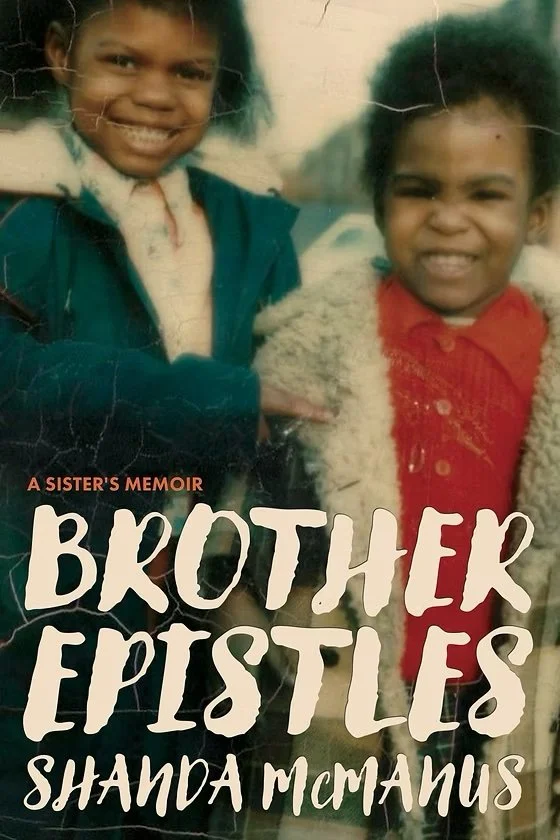
Courtesy of Split Lip Press