To the Soldier Who Wanted to Talk
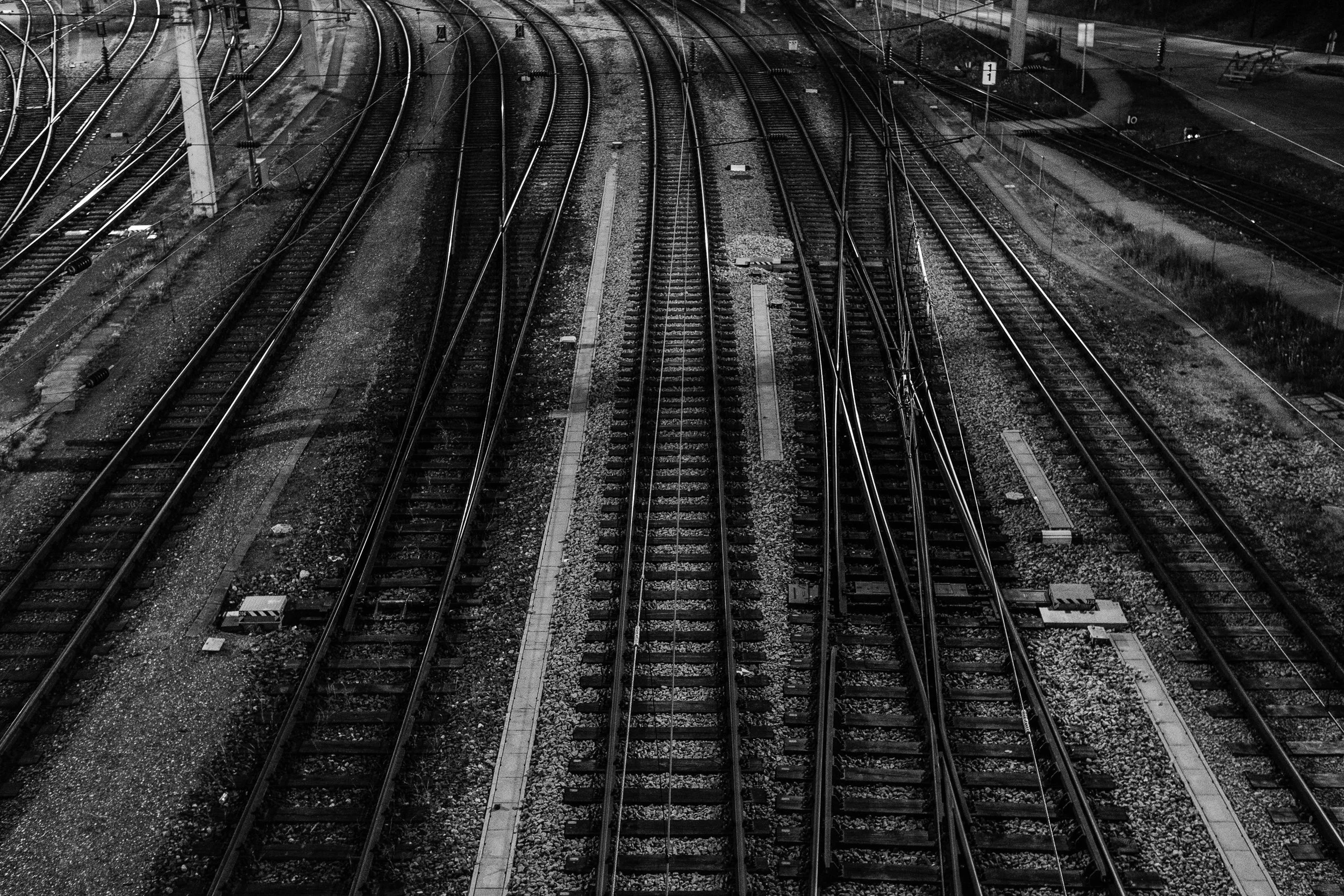
You got on the train at the last minute, seconds before it pulled out of Chicago’s Union Station, and as you walked down the aisle I begged the gods of public transportation that you wouldn’t sit in the empty seat next to me. The train had filled up with Amish people in bonnets, college students carrying coolers full of beers, and people with enormous suitcases who were moving or escaping or just didn’t want to pay the airplane fee for their luggage. In the Midwest, trains aren’t part of mainstream transportation—it was only ever the car-less and the drunk on that route between Chicago, where I lived, and East Lansing, where I grew up.
I sat in the window seat, staring into the darkness of the underground tunnel where the train sat, spurting and hissing, waiting to leave. I wore tight black jeans, Rachel Comey boots, and had perched a copy of Bluets on my lap. I was dressed for a role I was trying to play, and only doing a mediocre job. In my attempt at literary stylishness, I felt how much effort went into looking like a person I was hoping to be. But I knew I was an imposter.
“I’d spent years trying to impress people who seemed committed to finding me unimpressive.”
I had lived in Chicago for nearly a decade, having moved there after a youth spent under the perpetually gray skies of mid-Michigan. Along the way, I had come to believe that I was the kind of person who would leave the lilac bushes and red lava stonefront yards of the suburban Midwest for something more—a city by an ocean, a life writing books. It was an idea I’d come to from reading Jane Eyre, listening to old country songs, and watching ‘90s Disney movies where all the princesses have to leave where they're from to become who they’re supposed to be. So far I’d only made it as far as the biggest city in the Midwest, but like both Belle and Patti Smith, I wanted more. Twice before, I’d applied to graduate school, been accepted, and not gone, fearful to step into the life I’d been imagining for decades. But finally, I applied again and said yes. I was moving to New York City in the fall to study writing. I was Jay Gatsby. I was Bob Dylan. I was the mermaid Ariel.
As you approached, I could feel the inevitability that you would claim the empty seat next to me. I had filled the seat with a tote bag and was aggressively avoiding eye contact, hoping it might prevent you from asking if the seat was free. I didn’t have anything against you, specifically, but had wanted to be alone to listen to music and look out at the smelting plants of Gary rising in the darkness. I didn’t want to have to think about another body, to consider another story. It hadn’t even occurred to me that you might want to talk.
You asked me if you could sit down and of course I relented. You were younger than me by maybe six or seven years—I felt mature and knowing at thirty-one and you were baby-faced and buoyant, dressed neatly in a button down that I wondered if your mother had bought you. Your khaki pants and confident swagger gave you the look of a guy who had recently graduated from a mediocre business school, and you reminded me of the popular boys from my high school—the ones who wouldn’t have given me a second glance back then and whom I thought I was a bit too good for now. But also, you were handsome.
Despite all my clear signals that I didn’t want to talk, you asked me how I was doing and where I was headed. I gave curt answers at first. I was fine. I lived in Chicago. I was going to East Lansing. You asked me about my job as a museum curator, and then, surprisingly, seemed genuinely interested and not a little impressed. You wondered about my favorite artifacts, were curious what each day at my job contained, and followed up with questions about how I ended up working at the small historic house museum on the west side of the city. I took out my earbuds. I smiled.
You’d never met anyone who worked at a museum, you told me, and had only ever been to one or two on your own. You liked art, but had heard of only a few artists—Monet, you said, had really made an impact. When I told you I was moving to New York that coming fall to do an MFA in writing, it felt like I had told you I had been picked to man a mission to the moon. “I’ve never met a real writer,” you said with a puppyish joy that made me blush.
I was embarrassed by your naivete, but your admiration thrilled me. I’d spent years trying to impress people who seemed committed to finding me unimpressive, who wanted to name all the painters they loved that I’d never heard of, list all the movies they’d watched that I hadn’t seen. I had come to believe that I would have to learn their references, earn their respect, in order to be a real artist or writer—their approval was the entry fee to the life I wanted. Their confidence and their taste beguiled me, as did their seeming certainty that they already knew exactly what life they wanted and how they might get it. Over the years, I’d become a wisp of smoke that had succumbed to these stronger winds, ceding the set design, casting, and maybe even the plot of my life to their fantasies and choices. Sitting with you, I felt the power of being on the other side of the divide—the one who squirmed at your childish taste, the one who felt sure about what art was good, the one who knew what she wanted. But I also felt something else. In your enthusiasm for the corny art you loved, I remembered that pleasure, entertainment, even sentimentality can be part of the reason art might speak to someone. It sparked a question I couldn’t yet articulate, a question I still struggle to answer: What art would I make if I didn’t care what anyone else thought?
The train sped out of the city and you offered to buy us beers in the bar car. While you were away, I began to wonder what kind of story we were in. Was this a Springsteen song or an indie film? A romance or a tragedy? Was I a manic pixie dream girl? Were you a doltish galumph with a heart of gold? Even in my fantasies of the time we would spend together, I searched for knowable grooves, clear archetypes, clichés. I struggled to see myself, to see you, to see much at all, beyond the tropes that I expected.
When you came back, you told me you were a soldier, and you described the boring, repetitive clerical work you’d done while deployed. The very fact that you were in the army at all bristled against the picture I’d begun to paint of you. Your hair gel, your countenance, and your boat shoes all suggested someone who had a bit of money, who had grown up taking ski trips to Aspen and aspiring to a lake house in Wisconsin. I’d thought of you as an upper-middle-class striver. Perhaps because I’d met so few at that age, I assumed soldiers joined up because they had to, that they were largely immigrants or working-class people with few other choices than the military. I felt an uncomfortable dissonance as I tried to square all the assumptions I was making about you.
“Those hours asked me to push beyond the storybook way I’d been imagining the world.”
We spent five hours together on the train. In so many ways, you could have been anyone. You were a flirt, a young man trying his luck, a boy who’d been raised well enough to ask questions and to not only talk about himself. I can’t remember how many beers we drank but I remember you telling me about barfing up Chex Mix on a childhood camping trip and eating mussels with a high school lover on the Jersey Shore. Our time together transformed you from a character to a person. You weren’t a down-on-his-luck farmboy who enlisted to make something of himself, and you weren’t a slick finance guy with terrible taste. I wasn’t a bohemian cool-girl artist, and I wasn’t a woman on the verge of escaping the shackles of a small Midwestern town.
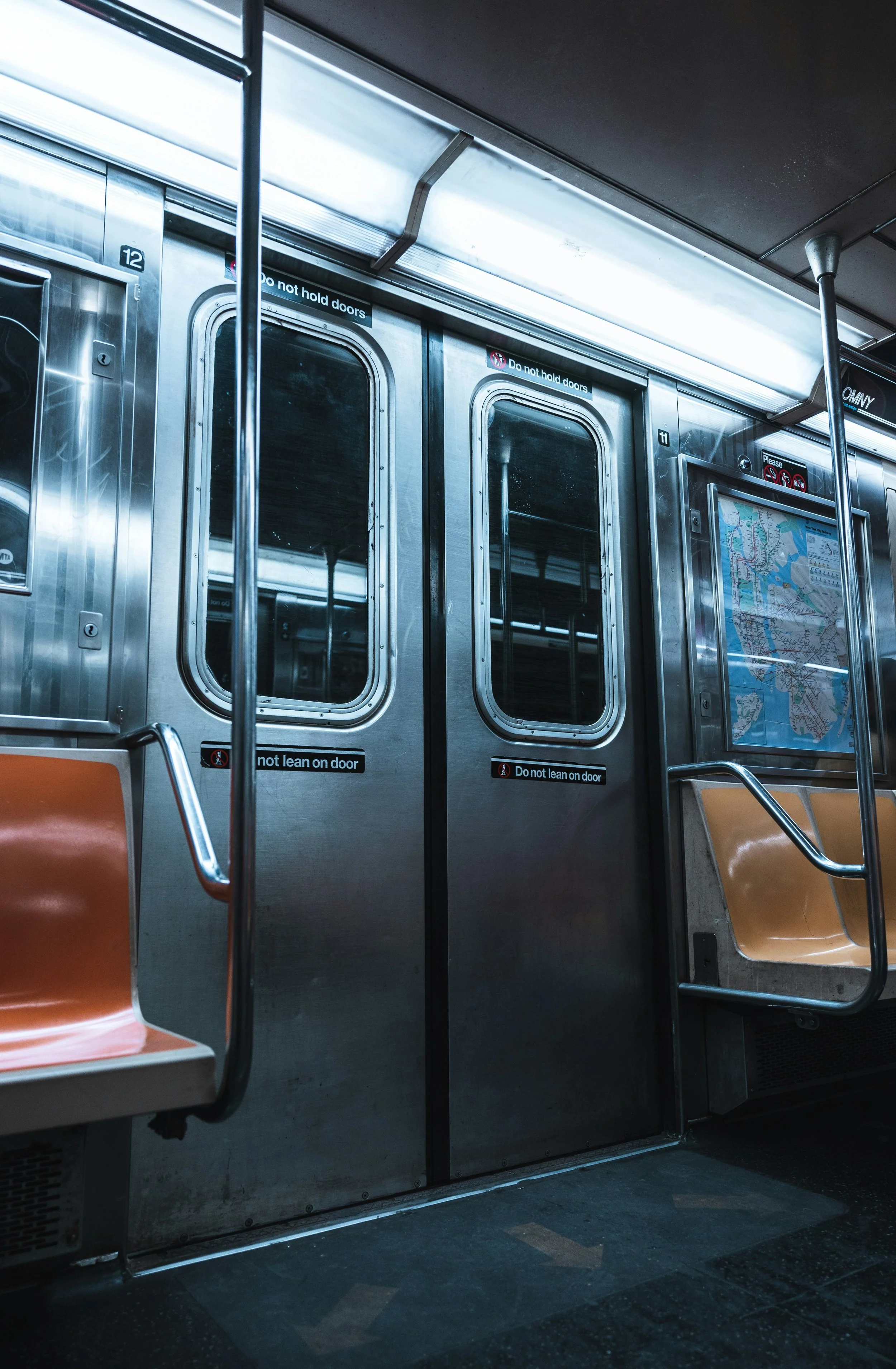
Nearly fifteen years later, I don’t remember your face, but I remember our knees next to each other, the fluorescent light glaring off the window, the feeling of vastness and possibility in the hours of that journey. I hadn’t planned on talking to you at all, hadn’t wanted you to sit next to me, had hoped to stay inside the cubby of my own mind. But those hours asked me to push beyond the storybook way I’d been imagining the world. Neither of us were trapped inside the confines of a novel or a song, with a clear beginning and end, a limited backstory, a neat takeaway. I’d always been so tempted (and would, of course, be tempted many times again) to see myself and the people around me as characters, forgetting how capacious and strange we all are. When I think back on those hours together, I think about how they kept unfolding, and through the sheer relentless joy of time spent side by side, we both grew more complicated and specific.
The train barrelled through the world, carrying us all towards our separate lives. Outside, kitchen lights flickered on, the lake gleamed. Inside, the college students sitting behind us drank themselves into a snoring sleep. Lovers and parents stood on the platform of each station when the doors opened, waiting to welcome someone home. And you and I sat, holding the world open together, killing time before we got where we were meant to go.
About the Author

Heather Radke is a writer and Contributing Editor to WNYC's acclaimed podcast Radiolab. Her first book, Butts: A Backstory, was published in 2022 and was listed a best book of the year by Time, Esquire, Publisher's Weekly, and Amazon, amongst others. She is working on a new book about the wildness of pre-adolescent girlhood.
Read Heather'’s “Behind the Essay” interview in our newsletter.
Edited by Tusshara Nalakumar Srilatha.
Header photo by David Hellmann.