Dusk in Rodanthe
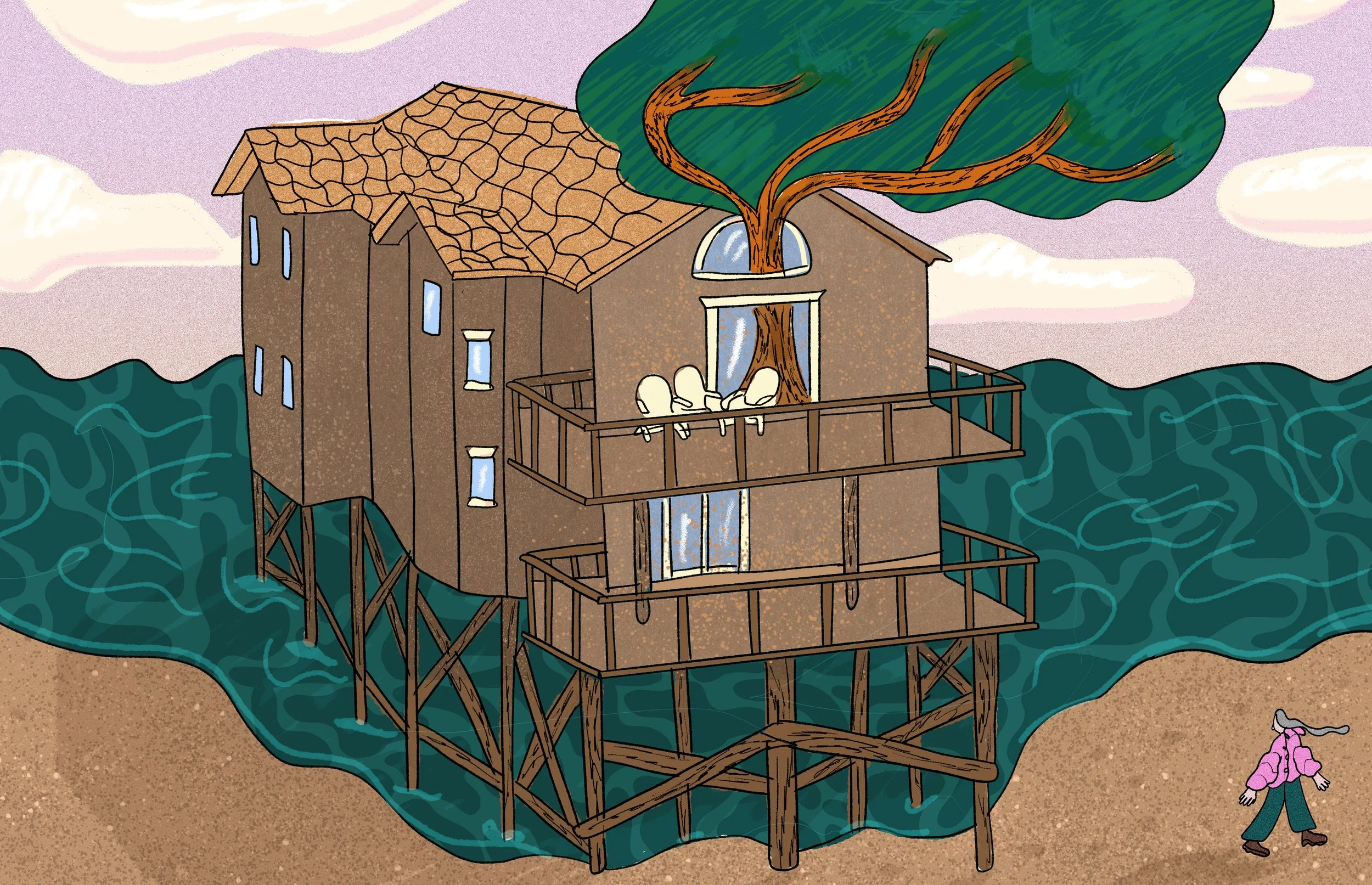
Dusk in Rodanthe comes pink and bleak. I’m alone in the wind as the “feels like” temperature drops to 21 degrees. Beyond me: the ocean stretched wide and flat as a picnic blanket. Above me: clouds, thin and threadbare, painted with late sun. There are no wild horses here (that’s Corolla you’re thinking of, 60 miles north), and no Richard Gere. The house from Nights in Rodanthe looms over my right shoulder, though, with its iconic blue shutters, its white lights outlining the verandah and stairs. Maybe one or two guests, this being the off-season after all. But the house that compelled me into this cold is not that one, not the famous photo op from the sappy romance. Instead, I’m drawn to the never-receding water’s edge, to a house on stilts, with its power lines cut, its water lines cut, all its lifelines slashed and dangling. Big, rusted nails jut out of the underwood. I stand obstinate and awestruck under the house where no one has lived since—when? It's hard to say, and there’s no one around to ask.
Some houses get to be old, to become historic, velvet-roped and visited by tourists who linger in the gift shop on the way out. Postcard features. Well-funded restorations. But this house on stilts—I want to call her a lady, a grand old dame—only gets to be abandoned, her advancing years a spectacle the community wishes to ignore. Maybe I’m starting to see my own middle age in everything, projecting or simply recognizing that my value, especially to strangers, has shifted. Sure, I might have something to offer, but I’ve lost a certain crispness around my eyes, and the skin of my arms has slackened, despite how strong they are. My whole youth is barnacled now, grown over, like the stilts I lean against. Sturdy, and yet isn’t it easier to gaze at the glossy and the new?
While the light continues to wane, I’m taking pictures of the house, its two stories, its balconies stacked and wrapping around. If I ever come back to this place, I expect it will be gone, swallowed by a hurricane, reduced to remnants, then absence, complete and austere. The pictures are proof she lived here, as much as a house can live. I’ll keep her, as a screensaver or a Facebook cover photo, tend to the memory of a beauty many others have missed. I notice that the sliding glass doors are open, notice that not all the patio furniture has been removed. A few chairs caught in a mangled embrace. Now I think I was wrong when I said there are no horses here. The house is a horse whose reins have been loosened, a swayback horse put out to sea, that ancient pasture of salt and tears.
North is where I’m staying, so I have started trudging that way, leaning into the wind and the dying light. Every lover knows to look back at least once—to prove your love—and when I do, I think I see something moving inside the upper-most window. With my camera phone I can zoom in, then zoom in some more, as good as binoculars maybe. And what I see I know I’ll never explain—There’s a tree in there!
Not even the sea believes me, but with just two fingers, I enlarge the image. It’s real, not an apparition at all. I behold how the branches fork, brown tines that once must have been green, leafy even. Were the roots in a pot or growing out of the floor? How had the tree lasted so long, through storms and solitude, unsnapped? Then, without patience, darkness falls, the way they always say it does. Hard and fast, I hear it thud.
About the Author
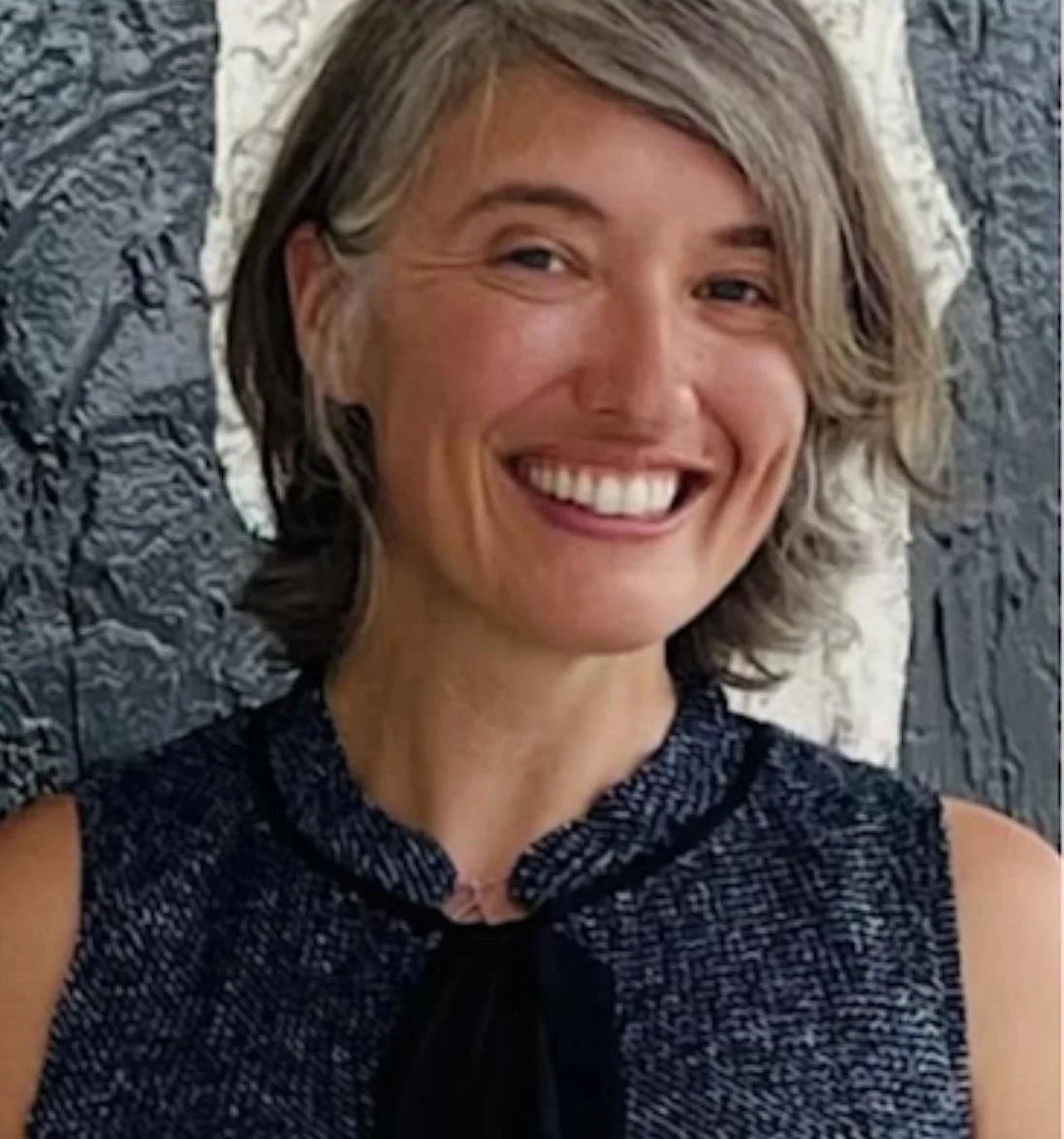
Julie Marie Wade's recent collections include Other People's Mothers (University Press of Florida, 2025), The Mary Years (Texas Review Press, 2024), selected by Michael Martone for the 2023 Clay Reynolds Novella Prize, and Quick Change Artist: Poems (Anhinga Press, 2025), selected by Octavio Quintanilla for the 2023 Anhinga Prize in Poetry and 2026 Silver Medalist in the Florida Book Awards. A finalist for the National Poetry Series and a winner of the Lambda Literary Award for Lesbian Memoir, Wade teaches in the creative writing program at Florida International University in Miami and makes her home with Angie Griffin and their two cats.
Illustration by Jane Demarest.
Edited by Tusshara Nalakumar Srilatha.