Goodbye to the Land of Red Crayfish
As a child, I was a collector of ghosts, and not the kind that wail in the dark, but the kind that lie still and hollow in the sun. My mission on hot, dust-licked afternoons was to find the hard, reddish-brown exoskeletons of crayfish. They would appear at the marshy edges of Lake Naivasha, abandoned like tiny suits of armor after a battle. I would cradle these brittle shells in my palm, admiring the way their segmented plates had once formed an impenetrable shield. Even dead, they held their shape. Even empty, they looked invincible.
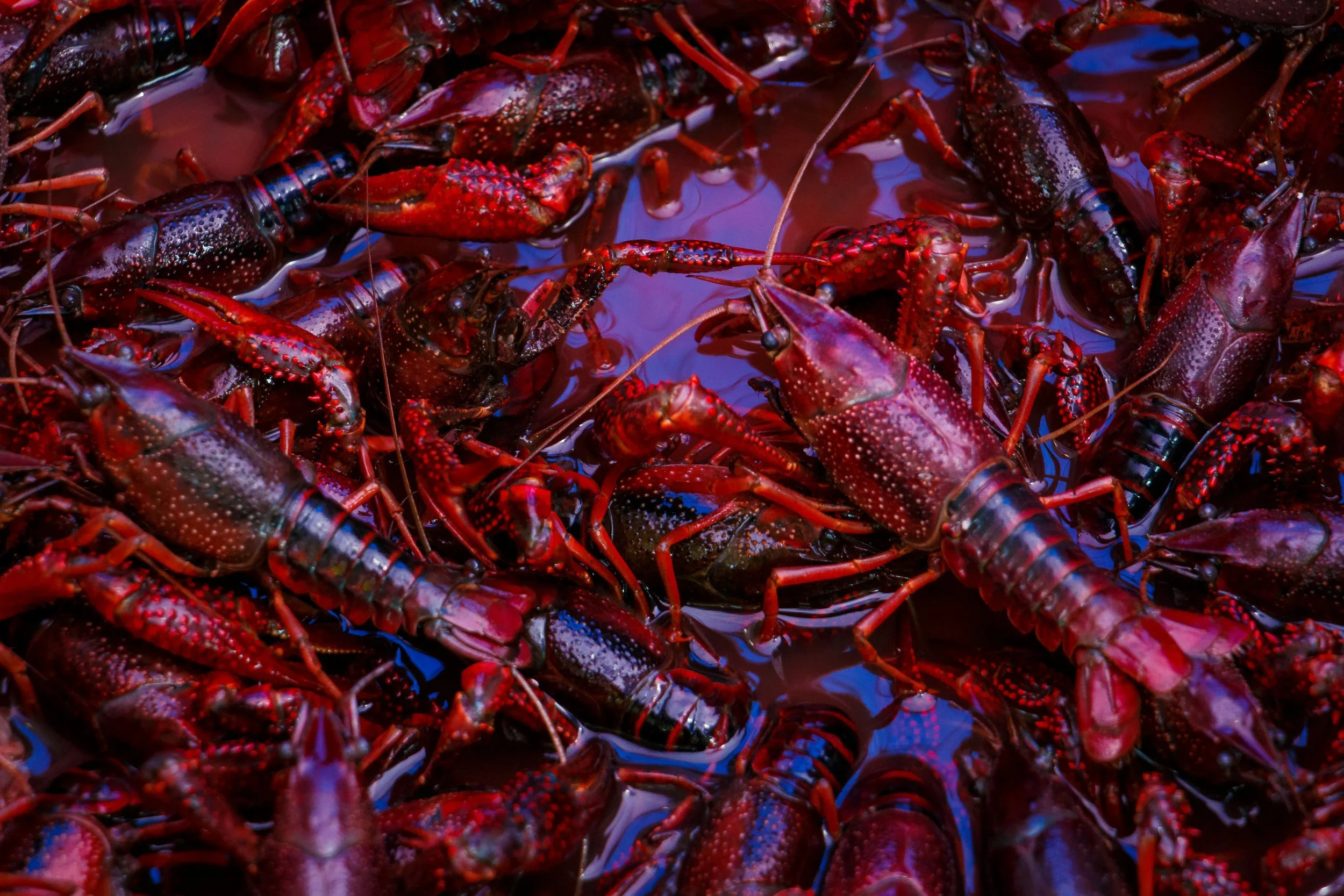
The color was the first thing I noticed, always. That particular shade of dried blood that has oxidized under a hot sun. It was the color of something that had once been alive and was no longer, yet refused to fully surrender. My seven-year-old fingers would pinch the edges with exaggerated care because the shells broke easily now that nothing lived inside them. The irony of how the strongest armor became the most fragile once abandoned did not occur to me.
Each shell was a treasure. A perfect, empty vessel that had done its job and could now be admired without the mess of a living creature inside. I would line them up on the rocks by the water's edge, sorting them by size, marveling at how something so brittle could have protected anything at all.
While I considered them toys, they were actually masterful biological machines. They were red swamp crayfish whose exoskeletons of chitin and calcium carbonate were not just armor, but the reason these creatures could survive weeks out of water and walk for miles across the land. In Naivasha, they were an invasive species, introduced in the 1970s to bolster the fishery by providing a new commercial harvest and act as biological controls which consumed the lake’s invasive weeds and the snail populations that carried liver flukes.
“As a child, I was a collector of ghosts, and not the kind that wail in the dark, but the kind that lie still and hollow in the sun.”
By the 2000s, when I was scouring the mudbanks, the crayfish had become an engine of the lake's food web. They fed the bass, the birds, and the otters, just as the flower industry was becoming the engine of the local economy. Large-scale farms, often owned by Europeans or Kenyans of European descent, mushroomed around the shores, mirroring the way the crayfish had spread throughout the entire basin.
The best shells were found on a particular side of the lake, in a zone that would, in my adulthood, become something I could name as riparian. One side of this zone was mud and reeds and lapping water that crept higher each year, swallowing the paths where we walked. The ground was soft there, unreliable, the kind of earth that sucked at your sandals and reminded you that you were only a visitor on land that did not want you. Beyond this same riparian edge, a few metres from the reeds, the workers’ quarters of the large-scale flower farms clung to the lake bank. These houses were a dense huddle of corrugated iron and scavenged timber. There, the air tasted of damp earth, and laundry lines sagged under the weight of heavy overalls which hummed with the cluttered noise of survival. But there was an invisible line, just twenty paces after the end of the workers’ houses, where the mud gave way to packed dirt and then to gravel and then to something smoother, and where everything changed. That was where the shells accumulated, caught against the base of a low stone wall or tangled in the roots of imported ornamental trees.
The wall belonged to an estate that belonged to Mr. X. That is what I will call him, though his real name is known in Naivasha town, spoken in low tones with a mix of resentment and reluctant admiration. His property was a fortress of green: lawns so lush they looked fake, hedges trimmed into sharp geometric shapes, a fence that was made of concrete and not barbed wire but somehow felt sharper. Behind that fence, the land rose slightly, just enough to stay dry when the lake eventually started swelling in the 2010s. Just enough to be safe. From the outside, I could see the roof of his house, a Dutch-style gable, imported tiles, the kind of architecture that had no business being on the shores of a Kenyan Rift Valley lake except as a declaration: “I brought this with me. I belong here more than you.” I did not know those words as a child. I only knew that when I stood at that wall, gathering my reddish-brown shells, I was standing somewhere I was not supposed to be. And yet, the shells were there. So I kept on returning.
Mr. X had come in 1995. That was the rumor whispered by neighbors, one I caught in fragments. He was a Boer, from South Africa. Apartheid had fallen the year before he left. He bought the estate from a British family, a ghost from an older colonial wave. He had arrived with his family the same year the crayfish population in Lake Naivasha reached numbers beyond any previous count. The invasion, it seems, came in waves, and Mr. X was the newest shell on the shore.
“The ground was soft there, unreliable, the kind of earth that sucked at your sandals and reminded you that you were only a visitor on land that did not want you.”
I never spoke to him. Not once. I only watched from the border—his border, really, though he had no more right to it than the British man before him, than the British colonizers before that—who, in setting up Naivasha town, had evicted the Africans who lived there—than any of them. I watched his family come and go in grey SUVs with tinted windows. I watched his workers, some of whom I recognized from town, walk through a side gate with their heads down and their shoulders curved. I watched the way the green lawns stopped exactly at the property line, as if even the grass knew not to cross into the mud where workers from the surrounding flower farms lived. And I watched the crayfish shells, scattered like fallen soldiers at the base of his wall, as if they too had tried to cross and failed. This was the border where two worlds met. They did not mix. They simply pressed against each other, the floodplain and the high ground, and left a thin strip of no-man's-land where a seven-year-old boy could crouch and collect the armor of the dead.
I was not supposed to be at that wall so often. But I had a cover, and it was my sister. She was once fourteen, then fifteen, then sixteen, and she had noticed what I had not: One of Mr. X's workers was young and handsome and stole glances toward the road whenever we walked past. He worked the irrigation lines on the home's western edge, the section closest to the border where I found my shells. My sister found excuses to pass that way. I found excuses to follow her. She would lean against the low stone wall and pretend she had dropped something. Within minutes, he would appear, wiping his hands on his trousers, his face breaking into a smile that made my sister forget I existed. While they talked—or while they stood too close, or while he glanced around to make sure Mr. X was not watching—I hunched over the mud and collected my reddish-brown trophies. She got her romance. I got my shells. Neither of us acknowledged that we were conducting our business at the border of a man who might see us as trespassers.
The lad was not a boy, really—he was nineteen, maybe twenty, old enough to have calloused hands and a tiredness behind his eyes that no teenager should carry. But he was young enough to risk Mr. X's wrath for a few minutes with a pretty girl. In the afternoons when my sister lingered longer than usual, I would drift closer and listen. Not to their whispered endearments, those embarrassed me, but to the complaints he let slip when his guard was down. “He pays us on his own time,” he said once, crouching to tighten a valve on a drip line. “Not on the fifth of the month like he promised. When he feels like it. When we've begged enough.” Another time, his voice dropped lower: “He called us lazy last week. Said we don't know real work. Said in South Africa, in the 70s and 80s, the boys worked harder for less.” My sister touched his arm. I pretended to examine a shell.
One afternoon a few weeks later, the last time I ever went there, started like any other. My sister tugged my arm and said “Come,” and I followed, because the shells were waiting at the border, because her guy would be there with his tired smile and his complaints about Mr. X. But when we reached the wall, he was not there. We waited. My sister called his name softly, then louder. Nothing. The irrigation lines were silent. The side gate to the estate hung open, swinging slightly in the lake breeze. My sister's face changed. I did not understand what she suspected. I only knew that she grabbed my hand and pulled me toward the gate, and I went because I had never seen her look like that before.
We learned later what had happened. Some items from the toolshed. Cash from a drawer Mr. X thought was hidden. Not a fortune—nothing that would change a life—but enough to disappear on. Maybe enough to board a matatu bound for some other town, some other farm, some other border where a young man could start over. He had waited until Mr. X was drunk the previous night, and had slipped away while the old man snored in his armchair. My sister did not know this as she pushed through the side gate. She only knew that he was gone, and that something in her chest had cracked open, and that she needed to find him before the crack spread. I followed because I was seven, or perhaps eight already, and because following her was what I did and because somewhere beneath my feet, I could see the glint of a reddish-brown shell I wanted to pick up.
We found Mr. X instead. He was standing in the driveway between the main house and the workers' quarters, swaying slightly, and with something else in his eyes that I had never seen in a grown-up before. His shirt was untucked. His face was flushed. The fancy house behind him—the Dutch gable, the imported tiles, the manicured lawn—looked like a postcard that had been smeared with mud. He saw us before we could run. “You,” he said. His voice was thick, slurred, but the word landed like a stone. “You know that boy. You know where he went.” My sister shook her head. She tried to step back, pulling me with her. Mr. X took a step forward. “Don't lie to me,” he said. “I've seen you here. By my wall. Talking to him.” My sister's mouth opened. The farm boy's name came out and something in the old man's face broke.
“She only knew that he was gone, and that something in her chest had cracked open, and that she needed to find him before the crack spread.”
He turned and walked back toward the fancy house. That was the moment. Not the shouting. The moment was the walk. The way he moved with purpose, his shoulders squaring, his empty hand reaching toward the door. The way my sister's breath caught because she knew—because everyone in Naivasha knew. Just two years earlier, Thomas Cholmondeley, son of the 5th Baron Delamere, perhaps Kenya's and Naivasha's most renowned settler, had shot a man from town. A poacher, the family said. A trespasser. The man died. Cholmondeley was charged, yes—and then released, and then back on his estate, and then back in the papers again for another shooting that had another victim die. The law had been bending for men like that since before my mother was born. And now another was walking toward his door, and my sister was pulling my arm, and we were running.
I remember my sandals slapping against the gravel, then the packed dirt, then the mud that sucked at my heels and tried to hold me back. My sister's hand gripping mine so hard her fingernails left crescents in my palm. The sound of my own breathing ragged, too loud, the sound of a small animal that has just realized it is prey. I ran past the low stone wall where my shells lay scattered. I ran past the border between riparian and restricted, past the invisible line that had once seemed like just a line. I ran until my lungs burned and my legs trembled and the fancy house with its Dutch gable shrank to a dot behind us. And I have been running. Lake Naivasha’s red swamp crayfish molts its shell to grow, leaving the old armor behind—hollow, empty, still shaped like the creature that once lived inside it. I left mine somewhere on that muddy ground, between the man's wall and a stolen lake.
ABOUT THE AUTHOR

Frank Njugi is a writer, poet, and journalist from Naivasha, Kenya. His accolades include a nomination for the 2023 Pushcart Prize and recognition as a runner-up in the 2023 ILS–Fence Fellowship. He has also previously been awarded the Sevhage-Agema Founder’s Prize, the Jay Lit Prize for Non Fiction, and was shortlisted for the 2025 Rajat Neogy Editorial Fellowship. He is an alumnus of The Lolwe Academy, Nairobi Writing Academy, a 2024 African Writers Trust Residency Fellow, and a 2024 and 2025 International Literary Seminar Fellow. He was selected for the 2026 cohort of the Macondo Literary Festival's TBI Residency.
Read Frank’s “Behind the Essay” interview in our newsletter.
Header photo by Rasmus Gundorff Saederup.
Edited by Carey Baraka.