Goodbye to the Apple Farm that Raised Me
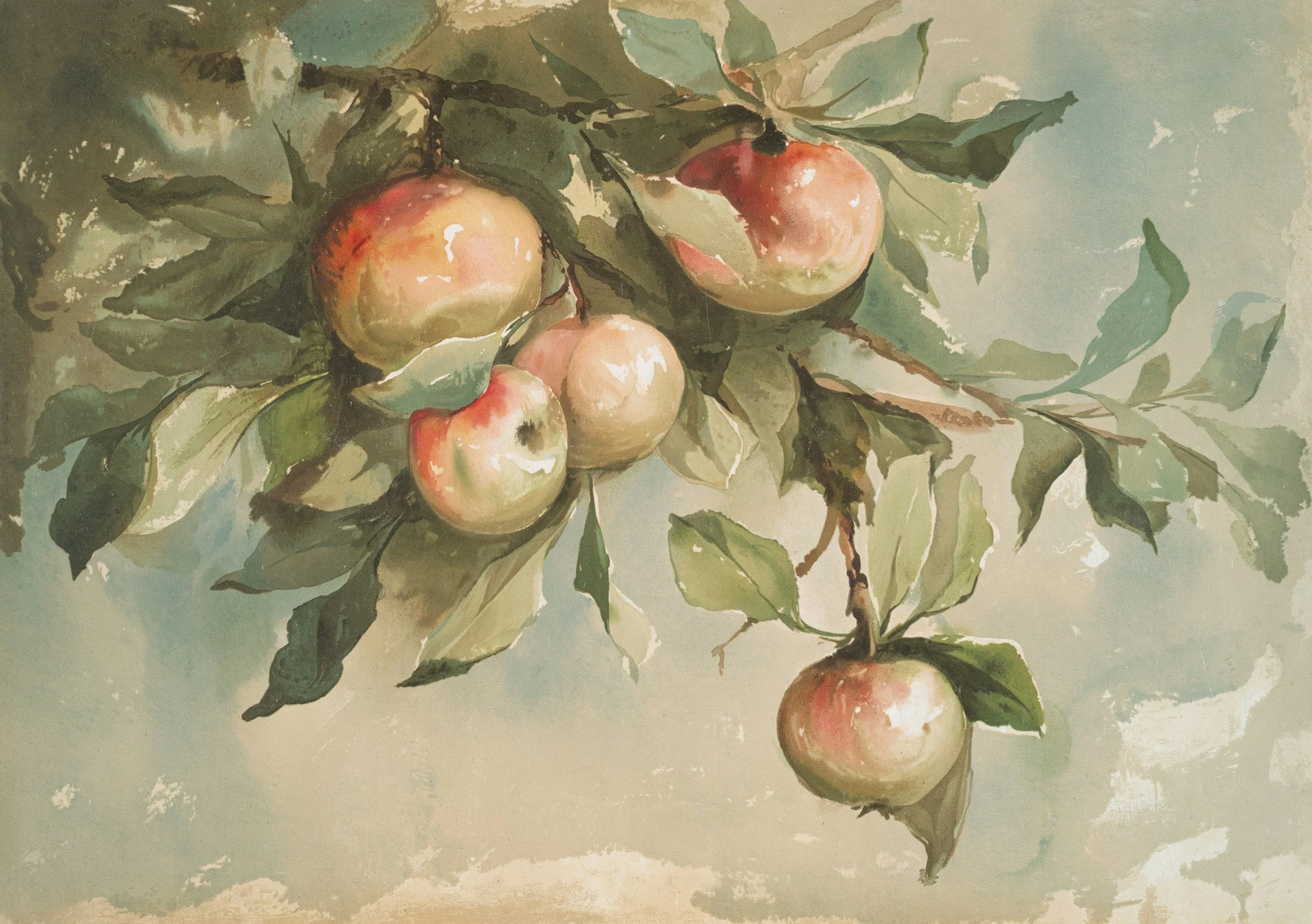
Last fall, I couldn’t eat enough apples. Macouns, with their crisp paper-white flesh and deep red dappled skin accented by splotches of green, proved infinitely compelling. I dallied with Cortlands, Jonagolds, Baldwins, Northern Spys, and the citrusy, French-descended Orleans Reinette, but I kept returning to the classic simplicity of Macouns. I ate one nearly every day, and when my supply ran low, I grew anxious, like I was going to miss out on some vital nutrient.
It took me a while to realize that I was afraid not of malnutrition but of a particular scurvy of the heart.
I was grieving.
My father died four years ago in January, but the fall is when I most miss him and the farm I grew up on. His birthday was in November, Veteran’s Day. But more than that, autumn is dedicated to the apple harvest. Picking, sorting, saucing, and cidering—this is how Dad spent much of October and November.
When my parents bought their 80 acres in rural Maine in 1977, they inherited a small orchard of gnarled trees already a couple of centuries old. The trees had not been cared for, and so Dad spent his first few years on the property learning their names and habits.
He bought books on the state’s native species and made use of pamphlets distributed by Maine’s department of agriculture. He taught me what he’d absorbed. Over the years, I learned that the pair of trees standing like sentinels on both sides of the driveway—that we called banana apples for their yellow skin and mild, sweet flavor—were probably a variety of Golden Russett, and they were good only for blending. To the side of the house was a skinny, beleaguered Wealthy, a variety bred in Minnesota by crossing a Siberian crab apple with seeds from Maine. The fruit was small and firm, and the white flesh was streaked with red, lending it a pinkish hue. Just beyond the living room windows in the back field were the wide-armed Wolf Rivers. The size of grapefruits, these apples were like soft, lumpy grandparents—welcoming and unassuming. Our standard dessert in winter was Wolf Rivers plucked from the root cellar then cored and stuffed with raisins, walnuts, cinnamon, and brown sugar, baked until the flesh was soft and sweetly redolent. I often ate this for breakfast with a dollop of yogurt.
On weekends, Dad and I would make cider. We’d spend the morning gathering drops—no matter if they had wormholes or had been nibbled by deer—and picking from the trees until we had a good mix of tart and sweet, acidic and mild. We tasted as we picked, noting how the flavors were evolving, observing how one tree or variety was flourishing while others might be lagging behind. The unblemished orbs we set aside for eating.
Sometimes, if the weather was fine, we’d press outside, the fall light coming at us slantwise. First we rinsed the apples in water, then one of us tossed fruit into the press’s hopper while the other cranked. And I mean cranked. My arms have never been more tired. I marveled at Dad, who was fifty years my senior. Sometimes he’d scrunch up his face and stick out his tongue and pant and smile all at once to signal Damn this is hard work, but isn’t it great! He never slowed down. Once the tub was filled with pulped fruit, we screwed down a cast iron disc, using my old tee-ball bat for leverage, until amber juice ran out from between the staves and we collected it in repurposed plastic milk cartons.
“It took me a while to realize that I was afraid not of malnutrition but of a particular scurvy of the heart.”
I don’t know how many gallons we pressed each year, but I do know we had to buy a second freezer to accommodate it all. We served cider at every meal (my mom liked to heat it up with a cinnamon stick to drink after dinner) and brought it to every picnic and potluck we were invited to. Most recipients were very willing; this golden brown liquid was the nectar of the old New England gods! Its richness and piquancy bore no resemblance to the overly sweet, pasteurized stuff you got in the grocery store or even at commercial orchards.
While we picked and pressed, Dad and I talked about what he was reading and teaching—books and courses on consciousness, the origins of religions, battles between scientists and creationists—and I filled him in on school, soccer, and my science fair projects. Words drifted between us in a welcome way, but they were not necessary. There was an easy, frictionless bond between us.
I especially enjoyed learning about Dad’s youth while we worked side by side. He had loved living on the farm near Colorado Springs with his five siblings, even though they had no electricity or running water and Dad had to carve his own toys. His mother made their soap from pig fat and wood ash. When Dad was 14, after years of decreasing returns on the farm’s cash crops—milk and dried beans—the family moved to Los Angeles, where a rich physician uncle who owned a hotel (called “Dracker” for Dr. Acker) hired them to serve as chambermaids and handymen. Dad made additional money by smudging the orange orchards—getting up in the middle of the night when the temperature dropped and lighting smudge pots to keep the trees from freezing. A couple decades later, armed with an education, he became a psychologist for the local VA, stimulating and useful work he enjoyed. But LA had changed dramatically, the orange orchards long plowed under, and he grew desperate to escape the traffic and congestion. He set out for Maine, where the population was notably decreasing, to again live close to the land.
I was born into a house with very few closets and a passive solar design for which Dad had drawn the plans. Built into a hillside, the house rested on telephone poles and was constructed with pine lumber from our land. The inside doors sported not traditional doorknobs but custom wooden latches. The bedrooms all featured lofts for extra sleeping and storage space, accessed by ladders attached to a pulley system. (At Dad’s 90th birthday celebration, I joked in my roast that Dad believed any problem, physical or emotional, could be remedied by either a lever or a pulley.) Though my mother sometimes referred to it as a “pine box,” I always found our house beautiful, especially in winter when it was lit up with warming sun pouring into the south-facing windows. But it was also a strange house, perpetually unfinished, riddled with mice, and dampened by leaky spots where the roofline changed angles.
Beyond the wooden, high-ceilinged spaces Dad had dreamed into being were all those acres he shaped with his hands. I helped out in the sprawling gardens (he grew everything from asparagus to yams) when it wasn’t too hot or too buggy. Dad would sometimes take me through the marsh in an inflatable canoe to visit the beaver dam, and after the horses arrived we’d ride together. But I explored the fields and forests on my own as well. I was probably always within shouting distance, but I remember intensely the peace and refuge of the crevices beneath the lowest limbs of the pine trees, from where I could peer out at the world but no one (or so I believed) could peer in.
I wasn’t hiding. I was thinking. About what, I now have no idea, but the habit of seeking solitude to let my mind roam and expand has never left me. It was clear from my father’s example that the freedom to read and ponder was part of the point of all that cultivation.
When I was in college in western Massachusetts, Dad would bring me boxes of apples he’d picked on his own. It made me ache to think of him up the ladder without my all-important ground support. Once, I came back from the dining hall to find two of my New York City-bred roommates playing some kind of bowling or batting game with the apples—essentially careening the fruit into the wall to see it explode. I was enraged. And hurt. Didn’t they know those apples WERE my father?
By now, Dad was an apple fanatic, and the rough native varieties that had come with the property were not enough. Year on year, he expanded the orchard. He planted new saplings in the front field near the so-called banana apples; Cortlands were my mother’s favorite and Liberties mine. He also experimented with grafting, in which the vascular tissues of a limb, or scion, of one tree are melded with the rootstock of another. One particularly successful graft from wild trees Dad humbly called Acker’s Wildings.
As long as I was living in New England, Dad would deliver to me a truckful of apples in October. I could never eat them all one-by-one, or even in pies or crisps, and I didn’t own a cider press, so my solution was applesauce, another staple from my childhood. Dad liked his sauce smooth and used a Foley food mill to remove the core from the softened fruit and grind down the skins, but I didn’t have a food mill and was too lazy to peel the apples. Besides, the skins are a large part of the flavor. So I cut around the core, roughly chunked the wedges, then cooked it all down with Dad’s cider, cinnamon sticks, and fresh ginger. I froze the bounteous result in jars and gifted them to the friends who often helped with the process.
And so, every fall since he died, when I have no homegrown apples to sauce or cider to press, I feel adrift, empty. I am mourning not only my father, but also the land-tethered life I didn’t lead. Hungrily, I reach for a store-bought Macoun, picked by a stranger. I savor the first bite and then devour the rest fast and unthinkingly as if the fruit might disappear before I can consume the whole.
The summer after Dad died and we’d sold it, I visited the farm with my family (the new owner of the farm generously grants me access to the property). The heavy front door swung open and we entered the mudroom, and then, though I didn’t want to, though I was scared to, I stepped into the living room. Here was the Defiant, the cast iron stove that kept us warm in winter, the tile backstop my parents had inlaid themselves. The bookshelves Dad had built to hold the Encyclopedia Britannica. But all the furniture was gone—the coffee table Dad had made, the ugly recliner next to the stove where he read for hours. The hot, bright sun flooded in only to bounce right back out, nothing soft to absorb it.
“In truth it never belonged to any of us, but we cared for it for a while. ”
I had dreaded this moment since I was old enough to know that someday I would leave. That the farmer’s daughter would not take over the farm. I fled outside and began to walk the property, my family milling around, none of us sure what to do. The purpose of the visit was to spread handfuls of Dad’s ashes onto the land he’d cultivated for 45 years, but beyond that we had no plan. I realized that although I loved my family, and loved them for the way they had loved my dad, I did not want to be among them. I wanted to be alone with Dad’s trees. I still have so much to learn from them, from that place, even though it is no longer mine. In truth it never belonged to any of us, but we cared for it for a while.
At a recent dinner with friends, one of them asked if I liked writing because it granted me alone time, or if writing filled the time I liked to spend by myself. I thought about this. I thought of the space underneath the pines. I thought of the tickly green leaves and fruity smell of the canopy of our apple trees. I thought of mucky marsh and getting stuck in the orange rubber canoe. Most of all, I thought about how being with Dad never took me away from myself. Our time together on the farm bred in me curiosity, perseverance, and the firm necessity of solitude. The life I live in my mind is of course an even greater gift than the horses we rode and all those bushels of apples.
I don’t live on a farm these days, and I travel too much to even raise a bed of herbs on the deck. But after Dad died I bought a Newtown Pippin, an early American variety that was a favorite of Thomas Jefferson, and planted it in the side yard of our Massachusetts home. We blessed the soil with Dad’s ashes.
After the tree was firmly established, I cut some young branches from Acker’s Wilding and tried my hand at grafting. I followed a YouTube video and used the special tape recommended. Then I waited.
It didn’t take long to see that the graft had failed. I’m not sure what I did wrong, but the surfaces of the rootstock branch and the scion never took to each other, never became one.
A couple years have passed now, and it’s time for me to try again. After all, Dad never took a setback as permanent.
ABOUT THE AUTHOR
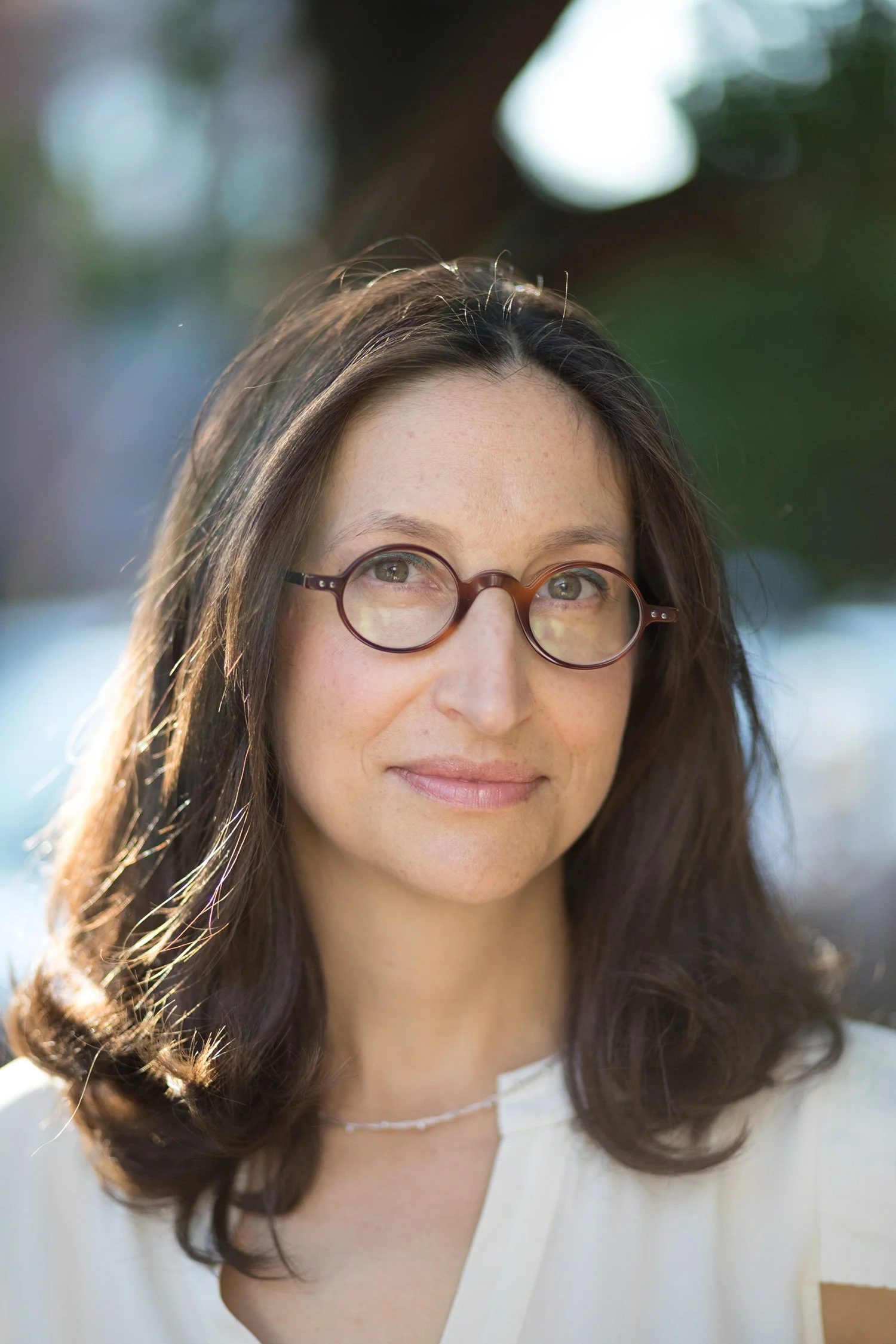
Jennifer Acker is a writer, editor, and translator. She is founder and editor in chief of the global, award-winning literary magazine The Common and the author of two novels: The Limits of the World, a finalist for the Massachusetts Book Award, and Surrender. Her memoir “Fatigue” is an Amazon bestseller, and her short stories, essays, translations, and reviews have appeared in the Wall Street Journal, Oprah Daily, the Washington Post, Literary Hub, n+1, Slate, and Poets & Writers, among other places. Acker has an MFA from the Bennington Writing Seminars and a BA from Amherst College, where she directs the Literary Publishing Internship and LitFest. She lives in Western Massachusetts and Portland, Maine.
Read Jennifer’s “Behind the Essay” interview in our newsletter.
Header photo courtesy of The New York Public Library.
Edited by Aube Rey Lescure.