Goodbye to My Old West Brothel Town
Driving from the Montana Book Festival in Missoula to our home in Portland, my husband Kevin and I stop for a night in Wallace, Idaho. Wedged between mountains and conspicuously old-timey, it’s the closest thing I have to a hometown. My family stayed in Wallace for six years during my childhood—longer than we stayed in other places. After we left, I’ve gone back only in dreams of peaked roofs, of long shadows, of staying out too late as the sidewalk begins to darken.
In the rental car, we drift through quiet streets in late fall light. The wheel turns before I’ve thought of where to go. My body still knows how to find our old house, the library, the grocery store, the swimming pool, what used to be the school, what used to be the dime store, what used to be the downtown gift shop where my mom worked briefly.
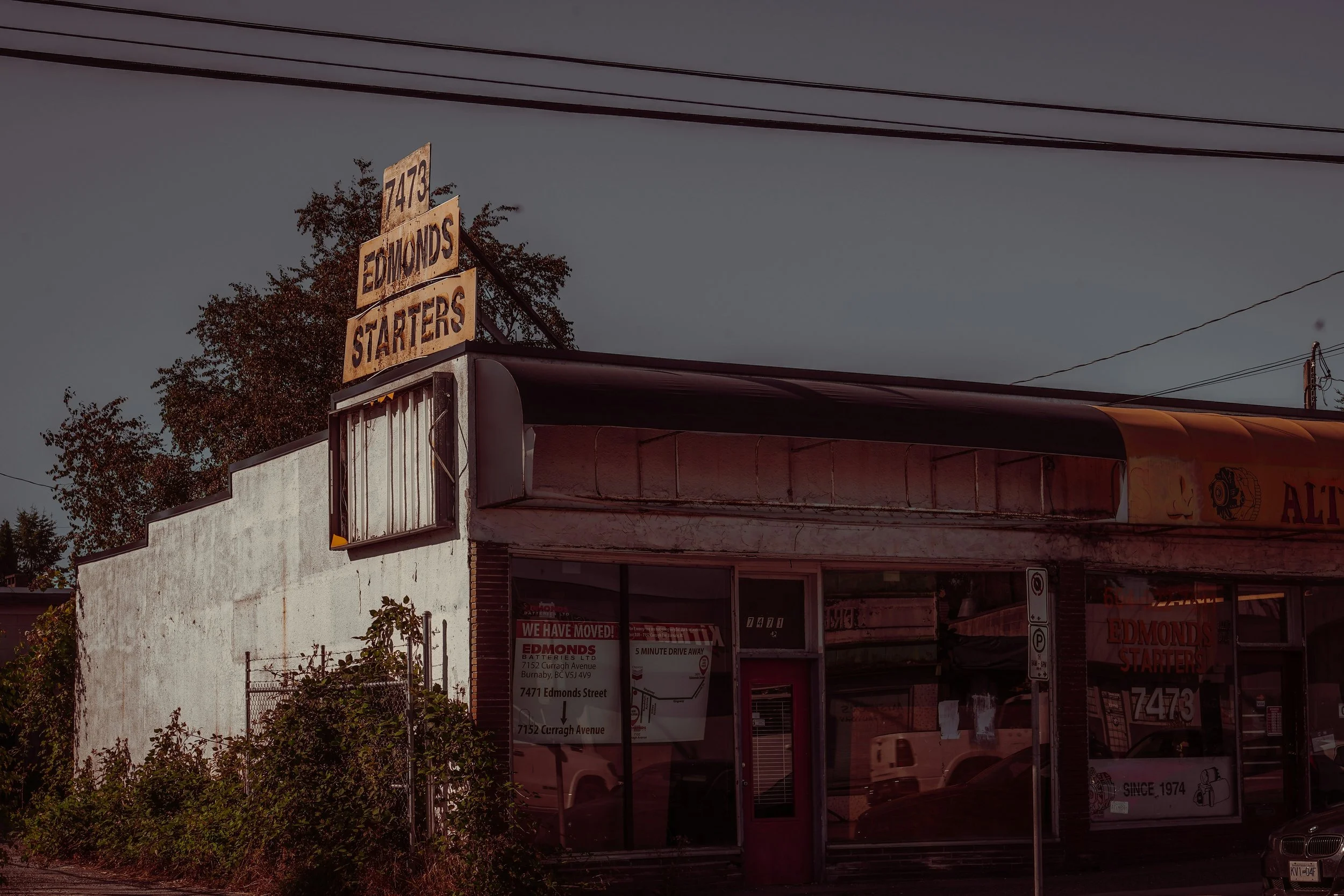
Dodging mine-tour four-wheelers driven by maybe-drunk tourists, we look for a place to eat. Vacant buildings sit next to occupied ones, and homes spill down into the commercial streets. In a second-story window, I spot the hand-painted name of the lawyer who drew up my parents’ will, though he must be long gone. I see a sign for the AM radio station that used to wake me up with Tennessee Ernie Ford’s “Sixteen Tons” and Johnny Cash’s “I Walk the Line.” It was the valley’s only signal, gone too. We peer into the windows of empty storefronts, now storage for the last two centuries’ industrial antiques. A statuette of a cowboy-hat-wearing ape with a penis and raised eyebrows peers from behind a curtain.
I catch sight of a girl in the shade of a brick building. She’s maybe ten or eleven, pale and lank-haired, wearing faded shorts and a half-shirt, her belly long, wide, and soft. She’s standing on a retaining wall as if it’s a stage, head tilted back, eyes closed, hip pushed out to the side, like she’s frozen in the middle of dancing without an apparent audience.
“I can’t get over this place,” Kevin says. “I’m from the suburbs. You’re from somewhere.”
I tell him anywhere is somewhere. But I know what he means. Wallace is a locality that has survived into the highly illocal internet age. It is a place not flattened by big-box sameness, not scrubbed of its recent material context. Somewhere isolated and highly particular.
All of Wallace is on the National Register of Historic Places, preserved by local businessmen of the twentieth century who made their money from mining and didn’t want the town leveled by a freeway. They held construction off for decades. When I was growing up here, Wallace’s downtown hung the only stoplight on I-90 between Seattle and Boston, a beacon of local control.
But it was most famous for something else.
“What was a girlhood among these relics, in a place where the structure of life was arranged profoundly, maybe unusually, in reference to men—their industry, their agency, their barely hidden desires?”
Wallace’s brothels flash into mind when I see the girl by herself downtown, dancing on the retaining wall. I think of them again when we check into our hotel. The innkeeper sends us down a long hallway with a metal key. I note how many rooms, and how small they are. We’ve been hearing about Old West prostitution at the book festival, and the local history paperbacks planted in every establishment feature it. We’ve seen ads for brothel tours. But its iconography is from the town’s early era: ruffles, corsets, cleavage. You might not guess that through the late twentieth century, encompassing the time my family lived there, “Lawless Wallace” was still a regional and even national destination because of its brothels, which operated blocks from schools, next door to the police station, just around the corner from where Kevin and I were staying.
Night falls and town is at once closed and not-closed. At the end of our block, an antiques shop advertises ice cream. The OPEN sign is on and so are the lights, but as soon as we touch the door handle, a man pulls into the parking lot and tells us to come back tomorrow. We wind up finding ice cream later at a lit-up gas station. On the walk home it’s as if we’re watching a movie scene: voices echoing on the dark street, male and female silhouette in some kind of tussle, a stumble into the alley. The sense of something going on out of view.
*
What was a girlhood among these relics, in a place where the structure of life was arranged profoundly, maybe unusually, in reference to men—their industry, their agency, their barely hidden desires? For a time, we could play mostly out of sight, picking up what was at hand in Wallace’s dollhouse world.
The town was so small a kid could walk anywhere there was to go. Mountains right there to climb. Burnt down cabins to find. We retraced their outlines, located their chimneys, dug old glass apothecary bottles from the dirt. With friends, we crouched on the roof of someone’s garage, “smoking” candy cigarettes. Long afternoons at the pool, pretending to be mermaids. A good amount of physical fighting, usually with boys. The sense that you needed to be able to defend yourself with blows—maybe from regular bullies, maybe from boy-packs who would chase you with the intention of exposing your body, the deep and unspecific kind of horror to have been shown and seen and consumed in this way. Later, it would make the occasional desire for beauty or attention fraught. Scrounging change to buy boxes of Lemonheads and packets of Lik-M-Aid and huge cartoon lips made of red, chewable wax. Buying lipstick and nail polish at the dime store, getting home perms from our mothers, squinting through a fog of Aquanet. Listening to someone’s older sister’s Prince tapes, listening to Born in the USA, which seemed like it could be about the place we were from, though it wasn’t. Haunting the library, laying out on towels in the elusive, longed-for sunshine, reading about other times and places, emerging from our summer lawn reading with new material for fantasy.
Everyone’s mom on another diet. Everyone’s mom with hair like Stevie Nicks or Dorothy Hamill. Some moms clearly struggling on their own.
There was freedom, no doubt, in the land of girlhood where we had the run and romance of the town, unseen by anyone, it seemed, but us, freedom to be both boyish and girlish—more freedom, maybe, than the boys had. They were surveilled by their fathers. Girlish, for them, was not a possibility in the way that boyish sometimes was for us.
As we grew older, hints of the adult world began to show through the curtain drawn around childhood. The stacks of Playboys and Hustlers in just about every house you’d visit; the friends’ older brothers wanting to show them to you. The older brothers taking you places in their cars, with loud music and way too fast. The whispering about the creepiness of this man or that one. The streets full of drunken, stumbling adults during the early June festival, a days-long drinking party with carnival rides that commemorated a hundred-year-old mining event. The whispering about The Houses, and then as soon as we were old enough to go on our own, the scary-fun of trick-or-treating them for the large candy bars they gave out.
I remember a narrow staircase, a lightbulb, a red lettered sign, and working up the courage to climb the steps. In my mind, we were not supposed to be there, strange as this thought seems since The Houses had candy that must have been for children. When an adult woman bent to drop chocolate bars in our bags, I’m ashamed to say I didn’t look at her, did not look inside, where I heard voices. I was afraid that there would be something about her that would mark this as a place I should not have come. I was perhaps even more afraid that she would seem normal, an adult woman like others in town. In my memory, there’s only a blank space in the doorframe beyond the threshold.
*
My family left Wallace when I was eleven, an age when a gender-fluid girl knows the end of true childhood is coming, when the gender scenarios on offer and the power relations between men and women suddenly become more salient. I’d lie awake on snowy winter mornings listening to creaky markers of the town’s constituencies: a string of polkas, a lot of country, a little Top 40. At night, call-ins revealed a glimpse of the behind-the-scenes relationships that may have made the town run. Childhood play, even flecked with danger, gave way to a creeping understanding that the town’s particular freedoms, if you were a girl, had a price, an expiration. The town began to suggest the stark choices around the ways a girl could imagine herself.
“The town began to suggest the stark choices around the ways a girl could imagine herself.”
Waking up in the hotel the next morning, I feel like I’m leaving again before I can properly see the place I’m from. Kevin, still fascinated with its somewhereness, downloads an e-book version of one of the paperbacks we’ve seen in town, Selling Sex in the Silver Valley: A Business Doing Pleasure. I ask him to keep going when he starts reading little bits aloud. The book was written by a local woman, about my age, with a Ph.D. in rhetoric. I’m hopeful about the possibility of an inside-outside perspective, the chance of hearing the place depicted in a voice and sensibility that might not be too far from my own.
I knew or half-knew that the Houses brought in large sums and bankrolled public works, paying for Christmas turkeys, band uniforms, and construction projects. I knew they were run and owned by shrewd madams but could not have operated without the close collusion of men with power—mining men, money men, judges, police.
The book, though, reveals some things I didn’t know: that the Houses employed no one with local ties. Town daughters, girlfriends, sisters, ex-wives couldn’t wind up there. Some of the Houses had ways of preventing customers from encountering each other on the way in and out. Tourists could enter through the front door but there were alley entrances for local men, who came and went unobserved.
The oral histories include dozens of mostly anonymous men and a few women who worked as “maids” in the Houses—not as sex workers, but performing jobs like laundry, vacuuming, and hostessing. We hear the same things over and over, nearly to the phrase. I recognize the repetitive quality of small-town consensus. In the brothel era, “Wallace was fun.” For whom? I think. Whose fun? The tourists on their four-wheelers buzz into my mind. And the girl dancing on the retaining wall downtown. And the price of fun. And who works for other people’s fun. And who pays for it, and how. And who decides the terms on which fun is had. And I wonder if it is because I grew up in Wallace in this female body that these are always my first thoughts.
We hear, again and again, two points: In reference to sex workers, that women “didn’t have many options then” and that they chose the work “freely,” rotating out periodically to work other brothels on a circuit and sending money home to their kids, who were presumably being raised by someone else. In the unexamined tension between these ideas—“limited options” and “choosing freely”—there is a familiar silence. An interview with an anonymous miner describes how high school boys would take their prom dates to a cheap dinner because they were saving their money to go to the Houses after. I keep waiting to hear from the wives or sex workers themselves, but both groups are almost entirely spoken about. Instead, the book circles back to celebrating the madams as proto-girlbosses. The madams depend on the men who run Wallace, but they have a man-like power to control other women. They make money. These are the terms on which the town, and the book, celebrates them.
Because it is rare, I listen hard to the testimony of one woman, no longer living in Wallace, who went to high school there in the 60s and married a local boy. Her husband’s patronage of the Houses began when they were in high school. She identifies it as a cause of being herself pushed into sex before she wanted it. She says, “It was like a secret club in this town between the men and the women in the Houses, but the other women in town weren’t allowed into the boys’ club.”
As we hurtle down the dramatic Columbia River Gorge under cloud cover, the parts of Wallace I couldn’t know as a child take shape in my mind. I imagine the repetitive barstool testimonies of men nostalgic for the Houses, women who eerily echo them. I conjure the town discussing women as either wife-mother or sex worker, the sex worker generally more admirable and fun. A perspective unrelated to the male prerogative was not allowed to be spoken, maybe not allowed to form at all. I know then that I am finally seeing the place.
And more than just the place. The way you can learn a thing without learning, know without knowing. In Wallace, the demands of the “business” and a deeply contradictory notion of freedom were the given conditions. As much as the town’s refusal to tear down the nineteenth century, this inherited common sense was in fact a big part of the somewhereness that made my small hometown itself.
I try to imagine how my understanding of myself—my relationship to my gender, my relationship to gender—might have been different if “woman” could have meant more than a few limited options, all of them subject to various kinds of dehumanization in the talk of town. Would I have felt the same pang at the first reflection of myself in a prom or wedding dress? The same quiet rage when people besides my children call me Mom instead of my name? The same sense of existential misfortune in this body, sharp and quiet and never quite gone? The fact is, I can’t ever know.
At the time of our visit, at the time of our long goodbye on the drive home, Wallace’s Houses are closed, and only one big mine, the original one, is running. But man-world never really shuts down. Its tones and signifiers, its visual fantasia, its little piece of language have blurred into the edges of my desire. When a girl is dancing in the perpetual shade of metal-filled mountains and a town’s narrow logic, she will have a hard time seeing the shadow she herself casts: her consequence, her beauty, her responsibility in the world. She might spend a long time trying to make these out.
ABOUT THE AUTHOR
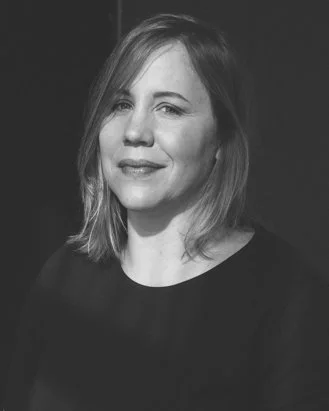
Jessica E. Johnson (she/they) is the author of the memoir Mettlework (Acre Books), the book-length poem Metabolics (Acre Poetry Series), and the chapbook In Absolutes We Seek Each Other (DIAGRAM/New Michigan Press). She is interested in inclusive learning environments, knowledge production, radical care, and the relationships between art, friendship, community, and social change. Her poems, essays, and reviews have appeared in The Paris Review, Tin House, The New Republic, River Teeth, DIAGRAM, Southeast Review, and The Common, among others. An Oregon Literary Fellowship recipient and two-time Oregon Book Award finalist, Jessica co-hosts the Constellation Reading Series in Portland.
Read Jessica’s “Behind the Essay” interview in our newsletter.
Header photo by Chelaxy Designs.
Edited by Aube Rey Lescure.