Darde Ghorbat
Darde Ghorbat
Farsi, noun
The pain of alienation
Farsi is a language of tenderness. It is an infusion of poetry and humor, the intersection of everything human. “Jigareto Bokhoram”—which translates to “let me eat your liver”—is an expression of endearment. A person who is “bi Namak” is “without salt”: dull, the antithesis of charming. You could say “I love you,” or you could say, “I am willing to sacrifice myself for you” (“fadat besham”). There is an inherent desperation in how we express our love and utter our devotion. I think about what it means to live in the currents of this language. To speak with such longing, reaching. It is a reverence that feels impossible to touch.
“Darde ghorbat”—the sorrow of exile, of being in a foreign land—is the phrase that stings the most. Like most of the Farsi that has been fed to me, “darde ghorbat” is a phrase I learned from my parents. My dad is a stoic man, but when he’s talking about Iran, I can see the most wounded parts of him.
Iran is a motherland passed down to me. Even now, decades after the Iranian Revolution, I see my parents hunger for the places of their childhood. Their memories are laced with cities and ancient ruins—they traveled to Shiraz, to Isfahan, to Persepolis. They describe the taste of lavashak, a sour candy that sticks to the roof of your mouth, peeled from a plastic sheet. They tell me about watching the 1968 Romeo and Juliet dubbed in Farsi, hearing Shakespeare’s language in their mother tongue.
My dad told me once that if he were to go back to Iran now, he wouldn’t recognize it. It wouldn’t feel like home. The Iran he remembers is a relic, entombed in the past.
I can’t think of a more painful exile.
“What they could give me was the imprint of their Iran, and the currency of Farsi. In giving me language, they offered me a rope to the past.”
As a child, I showed little to no interest when my parents tried to tell me their stories, revealing sacred memories. The movie theater in Tehran. The skirts my mom wore before the revolution, showing the skin of her knees. Both of my parents came from wealthy families, but everything had been lost. What they could give me was the imprint of their Iran, and the currency of Farsi. In giving me language, they offered me a rope to the past. Every memory I have of my grandparents, too, begins with language. The strain to understand them; to be understood by them. When I began to speak, Farsi was my mother tongue. In home videos that I’ve seen, my Farsi is legible, carrying conversations between my grandparents and my parents; between cousins it was sometimes babbling, but coherent.
As years passed, my Farsi slowly watered down to nothing. When I was in middle school, my grandparents moved from their home in Hacienda Heights to an apartment complex nearby. I remember sitting next to my grandfather (my baba-bozorg), holding his hand. This was how we could translate love. My Farsi, now splintered, was unintelligible, and his English was limited to a handful of words. I remember wanting to say something—to communicate some detail from my life. A friend I was fighting with, maybe. A math test I nearly failed. Instead, we held hands. My mom told me sometime later that he was angry with her for letting our Farsi disappear. Other kids who had gone to American schools and learned English still spoke Farsi. They could understand their grandparents, their stories of Iran—why couldn't we?
My own relationship with Farsi had become one of deep resentment. Years earlier, when I began Montessori, I came home and confronted my mom. “I don’t speak English,” I said. “I don’t understand anyone.” I have no memory of this, but through my mom’s retelling, I can peel back time and see myself as a small child, feeling lost, vulnerable, trying to exist.
“My parents’ loss is tangible. Mine is only an echo, but it doesn’t stop reverberating.”
I hated being Iranian. In Tehrangeles, “Little Persia,” schools were flooded with Iranian-Americans, but in our sector of Ventura County, we were sparse. I hated that my dad had installed an Iranian satellite at home, meaning that while other families got to watch Friends or Survivor, we were watching a pre-revolution Iranian sitcom. In the car, I grew to despise the Iranian radio channel, KIRN. I abhorred the scent of kabob—charred and brimmed with spices—that permeated my childhood. My brother and I protested (loudly and often) when Saturday night out was another dinner at Raffi’s Place, a popular Persian restaurant in Glendale. I remember refusing to eat there once, making my parents stop at In-N-Out so I could bring takeout back to the restaurant.
Like most teenagers, I knew what I liked, and I didn’t want to be different. I would watch episodes of Buffy the Vampire Slayer and Gilmore Girls and Dawson’s Creek; teen TV that defined my coming of age. I was envious of Buffy’s perfect blonde hair, the ease of Joey’s name. My friends, too, could talk to their grandparents, forming a closeness I couldn’t replicate with my own. I remember my best friend at the time listening to Eminem with her grandmother, sharing in the secret of a forbidden CD her mother probably wouldn’t approve of. This was a language between them, a home, and I had no such secrets with my maman-bozorg. The contradictions were endless: Even when I tried so hard to corrode their Iran from myself, I was desperate for their secrets—this currency of love enveloped in a small act of rebellion. I wanted to sink myself into Farsi and find my grandparents at the other end. My friends had it so easy. So good. They had one language, one world, and everything was simple. I longed to go there.
Eventually I made a set of rules—my parents weren’t allowed to speak to me in Farsi in front of my friends. My Persian name, Yassy, was often uttered in place of Yasmin. I told my family they had to call me Yasmin in front of my “sefid” (white) friends.
Darde ghorbat—my alienation wasn’t and isn’t from Iran itself. It’s in how Iran seeped into every inch of my life, eroding everything that felt normal. It’s the place that’s always been locked in someone else’s memory; an impression relayed through photographs. It’s also a mirror I can’t ignore. I don’t know which loss is worse—to be marked with a place or to only exist in the periphery of it, scaling its receding edges. My parents' loss is tangible. Mine is only an echo, but it doesn’t stop reverberating.
To this day, I am Yassy or Yasmin, existing in the in-between. My parents relented to my rules because I was loud in my annoyance. My anger. They gave me two identities, and I think about all the parts of me that don’t feel whole, stitched from flaps and fragments. Iranian and American. I claim both; I claim neither.
I am waiting to feel anchored.
My baba-bozorg passed away when I was sixteen, and my grief was a thing I couldn't name. Without words it can feel as if we have so little of ourselves—such narrow ways of being. It was my first real loss, and even now, I mourn everything that never happened. He didn’t get to see me graduate high school or go to college. In the simplest ways, he couldn’t see me drive, or peel the skin of an orange. What I mourn most, though, are the conversations we never had. I never asked him about his own childhood; his youth, his life. I didn’t know his favorite color, or the music he liked. If he preferred his chai light or dark. He was my mom’s stepfather, but this didn’t matter, because he was the one who raised her. What did it mean to inherit a child? I never asked, and now I’ll never know.
My grandparents are all gone now. The last to pass was my maternal grandmother; my maman-bozorg, in the fall of 2022. I felt a renewed grief then that I will never witness their Iran, and this feels unthinkable. It hurts in a way that feels endless—a wound that will never fully close. Can you inherit someone else’s exile? How can I be from a country I’ve never known?
I stand to lose the shape of their land. The contours of their mountains. But I also lose the particularities of myself—those echoes of my bloodline. Whose nose did I inherit? Whose hands? Who among them was a storyteller?
The people who made me—who made my parents, my grandparents, the thousands before them—touched a sacred and ancient earth. There are centuries of memory stored here. Without the renderings of language, none of us exist. There is nothing to impart.
In recent years, I have watched my own parents age, and I’ve been gripped with an overwhelming fear. What will happen to Iran? My only link is through the two people I love most, and one day, they’ll both be gone. I used to imagine myself married to an Iranian man, but as I swipe on the hellscape that is Hinge, this seems more and more unlikely. I can’t picture my future partner. When I try to conjure a face—a man I can build a life with—I don’t see Iran. New York isn’t Los Angeles. There are Iranians here, but it doesn’t compare to the sanctum of Iranian-America. I often grapple with moving back home, and as I get older, the question becomes more urgent. I think about what it means to go back there—surrounded by family and every relic of Iranian culture—and I feel a different burden. Tehrangeles is home, but New York is where I feel most myself, as a person and as an artist. It's where I’ve carved my own identity and desires, escaping the confinement of tradition. At home, there is a mehmooni every other weekend—an elaborate party to commemorate a birthday, a new year, an engagement. I want to continue to live my life on my own terms, free from expectations and my own perceived failures. I’m 36, single and childless, and this carries layers of shame. I love my family and my community, but I am living a different life.
If I do have children, I worry I will have nothing to offer them. I have no language, no memory. I’ve never been to Iran. I don’t listen to Persian music, or watch those classic sitcoms. To my parents’ disappointment, I don’t like Persian tea. I prefer coffee, I always have. I have finally developed a taste for Persian food, but it’s never my first choice. There is so little of Iranian culture that I worship, that I replicate in my everyday life. These are the edges that don’t fit. The scaffolding of my own Iranian-America.
In adulthood, I ache for the identity that brought me so much pain and confusion. I think about what my children’s Iranian identity would look like, and there is nothing tangible, nothing real. Their mother would be Iranian-American. The daughter of Iranian immigrants. And that’s all. My future children would be considered one-quarter Iranian by ancestry, not half. This link feels so tenuous, and I know it will continue to narrow. Iran will slowly erode, from the whole of my parents to my own halves, and then it will disappear completely.
During the spring of 2025, I went home for the Persian New Year, Nowruz, which falls on the spring equinox. I sat with my parents and watched an Iranian television show. My dad asked me if I understood what the characters were saying. As I watched, I transcribed what was happening, repeating words in English. I understood more than I realized; more than they realized, and I could feel my dad’s pride. Language is muscle memory. We can bury it, forgetting one version of ourselves. Like most of the things that build us, though, we can always go back, unearthing who we are.
In Farsi, I’m fortified with a strength I can’t find in English. Farsi has a taste—I feel the press of words that are carved with history and memory. Because it is my first language, I can unlock a barrier to myself, sever the constraints of time and place. Of memory. I can see my parents more clearly, too, bridging the distance between us. I can see the loudest parts of myself. My name. The dark arch of my eyebrows. The skin on my bones that earns the question, “Where are your parents from?” I’m still excavating the tomb, trying to understand each and every layer.
It also means identifying what I can reclaim, and how. If I do have children, I want to give them Persian names. I want to offer them this inheritance, this receding terrain, and instill in them the values of my parents. I want to fill their mouths with Farsi, and I know this means I must do what I’ve been neglecting. I need to recover my first language. I want to do this for my grandparents. My parents. To honor the ones who left. I want to do it for myself, too.
ABOUT THE AUTHOR
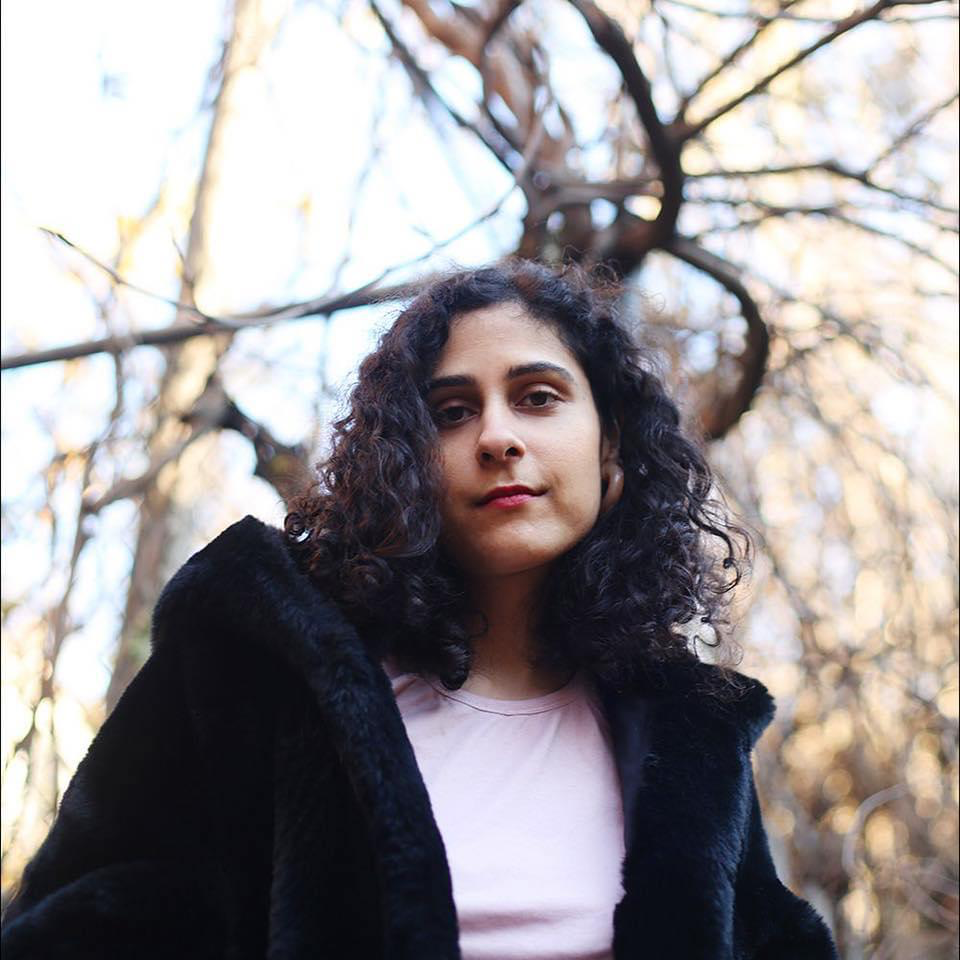
Yasmin Roshanian is a writer and editor based in Brooklyn. Her work has appeared in BOMB, Catapult, The Rumpus, and elsewhere. Her fiction often explores the strains of an Iranian-American identity, girlhood, and lineage. You can find her at yasminroshanian.com or connect with her on Substack.
Read Yasmin’s “Behind the Essay” interview in our newsletter.
Header photo by Etodayn.
Edited by Aube Rey Lescure.